


It’s Worth the Drive – S4E3: Shift Into Turbo
Episode 3 — Shift Into Turbo
How Engines Learned to Breathe Better
Opening
A soft whistle follows the accelerator.
Bentley’s head tilts. “Did you hear that?”
“That,” her grandpa says, “is a turbo breathing.”
He talks about air, pressure, and using what would otherwise be wasted.
The Never-Ending Search for More Power
Since the invention of the internal combustion engine, engineers have pursued a simple goal: produce more power while using less fuel.
Early solutions often involved making engines larger. Bigger cylinders, larger displacement, and greater fuel consumption could generate more horsepower, but these approaches came with significant drawbacks. Larger engines were heavier, more expensive, and less efficient.
Engineers needed a better solution.
That solution would eventually arrive through one of the most influential inventions in automotive history: the turbocharger.
The Origins of Forced Induction
The concept of forcing additional air into an engine predates the automobile itself.
In the late nineteenth century, inventors began experimenting with ways to increase engine power by compressing incoming air. More air allowed more fuel to be burned, resulting in greater power output from the same engine size.
Gottlieb Daimler experimented with mechanically driven air pumps in the 1880s, creating some of the earliest forms of forced induction.
These systems would later become known as superchargers.
At the time, however, engineers were still searching for a more efficient way to achieve the same result.
Alfred Büchi and the Birth of the Turbocharger
The turbocharger’s story truly begins with Swiss engineer Alfred Büchi.
In 1905, Büchi patented a revolutionary idea.
Rather than using engine power to drive a compressor, he proposed using energy already being wasted through the exhaust system.
His design connected:
- An exhaust-driven turbine
- A compressor
- A central shaft linking both components
As exhaust gases exited the engine, they spun the turbine. The turbine then turned the compressor, forcing additional air into the engine.
The concept was brilliant.
Instead of consuming engine power, the turbocharger recycled energy that would otherwise be lost.
Early Challenges
Like many revolutionary ideas, the turbocharger was ahead of its time.
Early engineers faced significant challenges:
- Poor metallurgy
- Weak bearings
- Limited manufacturing precision
- Extreme heat management issues
The technology simply could not withstand the temperatures and rotational speeds required for reliable operation.
For decades, development progressed slowly.
The First Successful Turbocharged Engines
By the 1920s, improvements in materials allowed Büchi’s ideas to become practical.
In 1925, a turbocharged diesel engine successfully entered service aboard German passenger ships.
The results were remarkable.
The turbocharged engines produced approximately:
- 2,500 horsepower
compared to
- 1,750 horsepower from similar naturally aspirated engines
Without significantly increasing engine size, power output had risen dramatically.
The benefits of turbocharging were becoming impossible to ignore.
Turbochargers Reach the Sky
Aviation played a major role in turbocharger development.
As aircraft climbed higher, thinner air reduced engine performance.
In 1918, General Electric engineer Sanford Moss began experimenting with turbocharged aircraft engines.
His work demonstrated that turbochargers could restore lost power at high altitude by forcing more air into the engine.
By the 1920s, turbocharged aircraft were reaching altitudes that would have severely reduced the performance of conventional engines.
The aviation industry quickly recognized the value of the technology.
War Accelerates Innovation
World War II accelerated advances in turbocharger technology just as it did with many other engineering fields.
Aircraft, military vehicles, and industrial engines all benefited from improved materials and manufacturing methods.
Engineers developed:
- Stronger turbine housings
- Better bearing systems
- Improved cooling methods
- More durable alloys
These advancements would eventually make turbochargers practical for everyday vehicles.
Diesel Engines Embrace Turbocharging
The first widespread automotive use of turbochargers occurred in diesel engines.
Heavy-duty trucks, ships, locomotives, and industrial equipment benefited greatly from increased power and efficiency.
By the 1950s:
- MAN
- Volvo
- Cummins
- Caterpillar
- Detroit Diesel
were actively developing turbocharged diesel engines.
Turbocharging allowed trucks to haul heavier loads without dramatically increasing engine size.
The technology fit diesel engines perfectly and remains nearly universal in modern diesel applications.
Turbocharging Comes to Passenger Cars
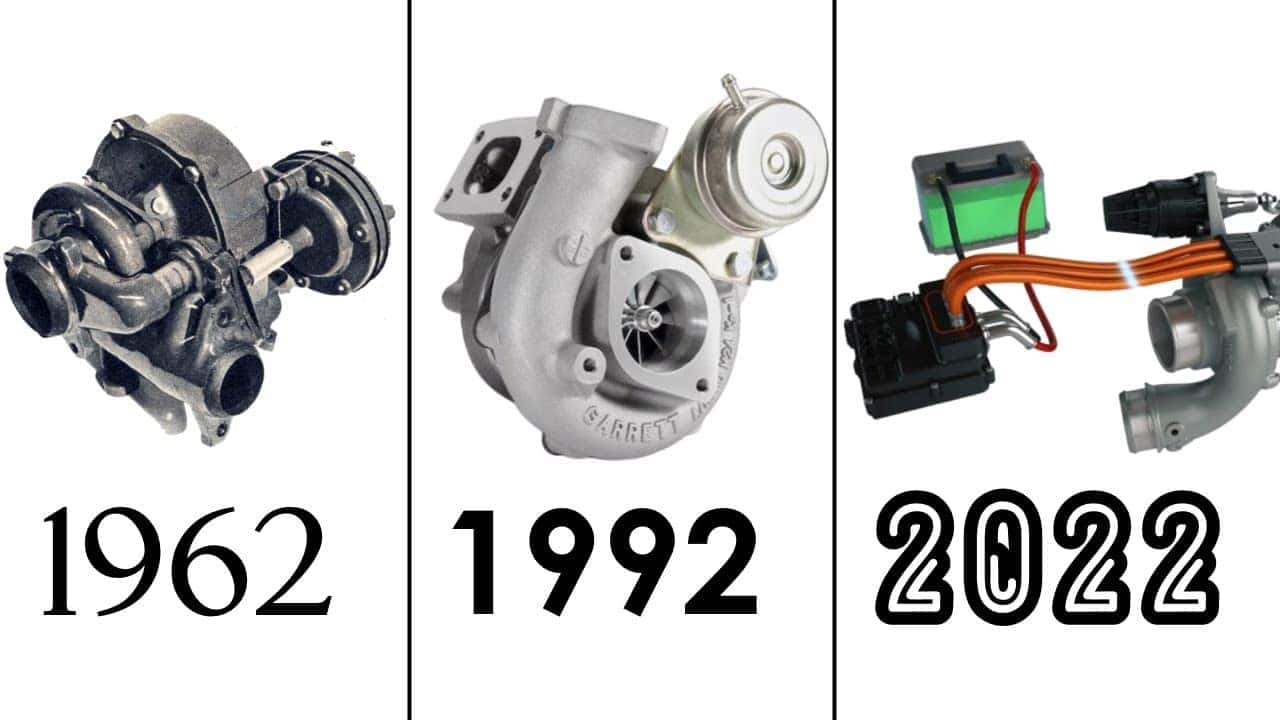
The first production turbocharged passenger cars appeared in 1962.
Two American manufacturers introduced pioneering vehicles almost simultaneously.
Oldsmobile Jetfire
Powered by a turbocharged 3.5-liter V8 producing:
- 215 horsepower
- 300 lb-ft of torque
Chevrolet Corvair Monza Spyder
Powered by a turbocharged flat-six engine that demonstrated the potential of forced induction in a smaller vehicle.
Both cars represented major technological achievements.
Unfortunately, reliability challenges limited their commercial success.
The public was intrigued, but the technology still needed refinement.
The Turbo Performance Era
The 1970s and 1980s transformed public perception of turbocharging.
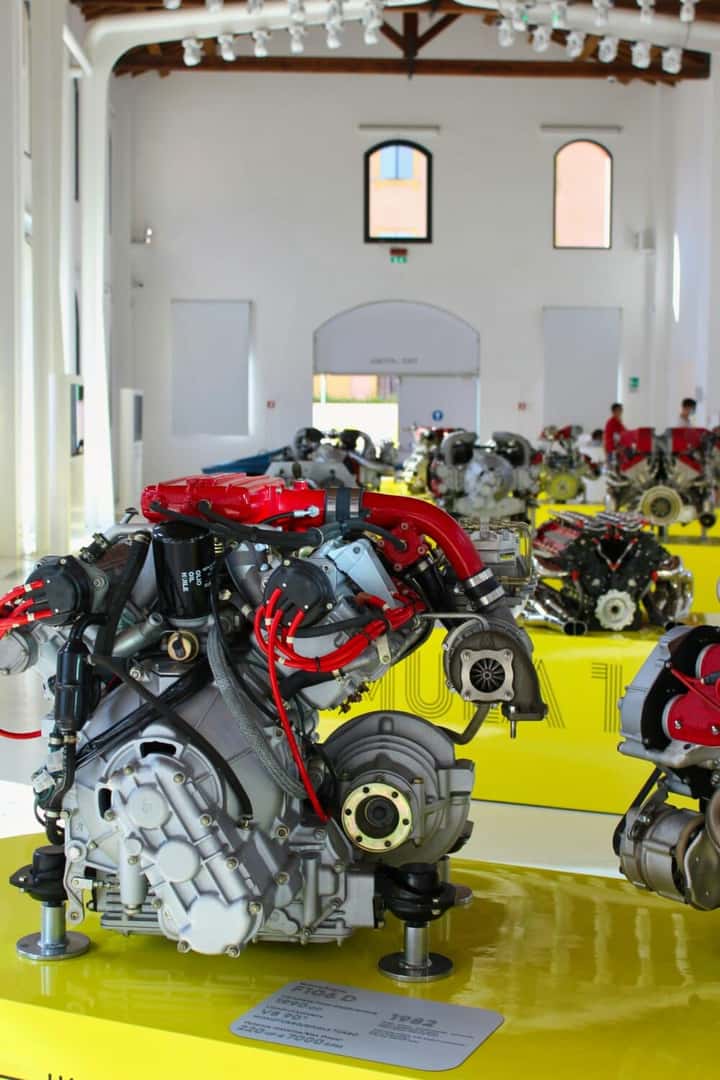
Manufacturers began using turbochargers to create performance vehicles that delivered the power of larger engines without the associated weight.
Notable examples included:
- BMW 2002 Turbo
- Porsche 911 Turbo
- Saab Turbo models
- Turbocharged rally cars
The word “Turbo” became synonymous with speed and high performance.
For many enthusiasts, a turbo badge instantly signaled something special.
The Challenges of Early Turbo Cars
Despite their performance advantages, early turbocharged vehicles developed a mixed reputation.
Turbo Lag
Drivers often pressed the accelerator and waited for the turbocharger to build boost.
The resulting delay became known as turbo lag.
Complexity
Turbocharged engines required:
- Additional plumbing
- Oil systems
- Cooling systems
- More sophisticated tuning
Reliability Concerns
Increased heat and pressure sometimes exposed weaknesses in engine design.
Many early turbocharged vehicles required stricter maintenance and careful operation.
Technology Solves the Problem
By the 1990s and 2000s, turbocharger technology advanced dramatically.
Improved computer controls and engineering innovations reduced many of the early drawbacks.
Manufacturers introduced:
Intercoolers
Cooling compressed air before it entered the engine.
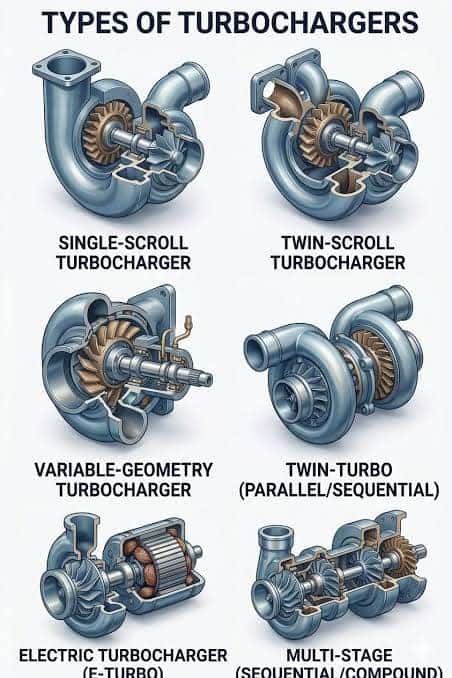
Twin-Scroll Turbochargers
Improving responsiveness and reducing lag.
Variable Geometry Turbos
Adjusting turbine operation to optimize performance across different engine speeds.
Electronic Controls
Modern engine computers precisely manage boost pressure and fuel delivery.
The result was greater reliability, better efficiency, and significantly improved drivability.
The Age of Downsizing
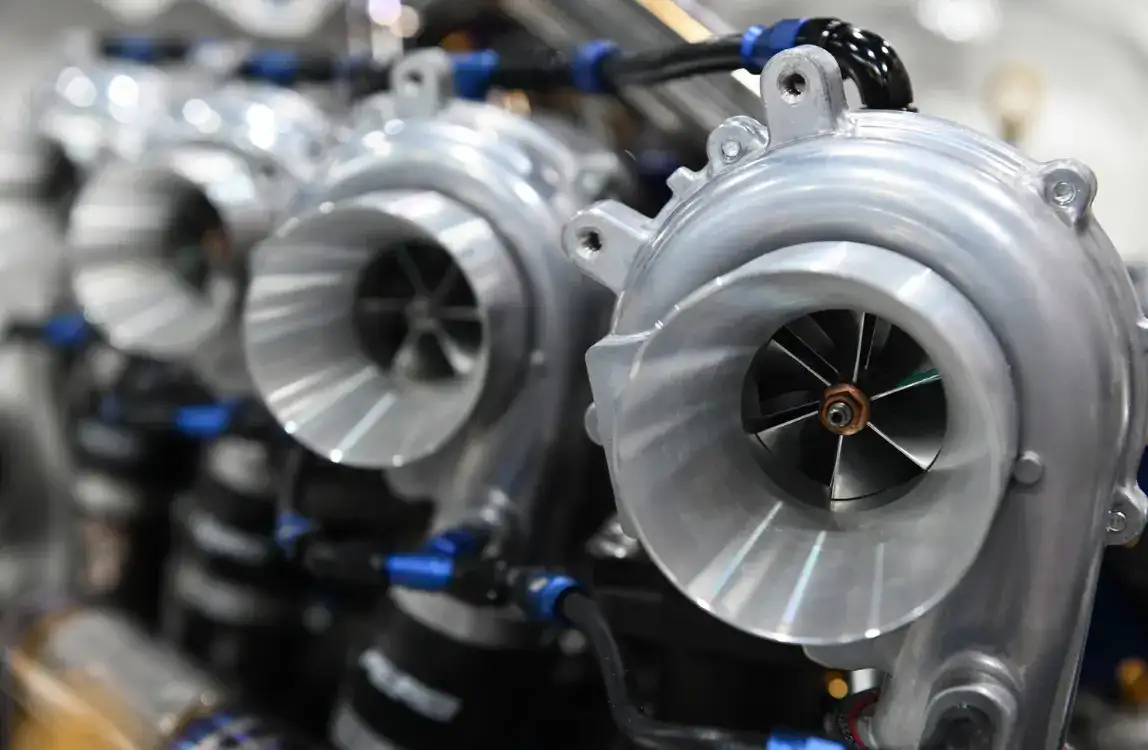
As fuel economy and emissions regulations became stricter, turbochargers found a new purpose.
Instead of simply creating more power, turbochargers allowed manufacturers to build smaller engines that performed like larger ones.
Examples include:
- Turbocharged three-cylinder engines
- Turbocharged four-cylinder engines replacing V6s
- Turbocharged V6 engines replacing V8s
This strategy became known as engine downsizing.
The goal was simple:
Provide the performance drivers expected while improving efficiency.
Modern Turbocharged Vehicles
Today, turbochargers are found in nearly every segment of the automotive industry.
They power:
- Economy cars
- Luxury sedans
- Pickup trucks
- SUVs
- Sports cars
- Heavy-duty diesel equipment
Some vehicles utilize:
- Single turbochargers
- Twin turbochargers
- Sequential turbo systems
- Electrically assisted turbochargers
What was once cutting-edge technology has become standard equipment.
The Future of Turbocharging
Even as electrification reshapes the automotive industry, turbochargers continue evolving.
Modern developments include:
- Electrically assisted turbochargers
- Hybrid-turbo powertrains
- Advanced boost management systems
- Improved emissions performance
Turbochargers remain one of the most effective methods of increasing power while improving efficiency.
For internal combustion engines, their future remains strong.
Why It Still Matters at Mills Auto Group
Few technologies have changed modern engines as dramatically as the turbocharger. What began as Alfred Büchi’s idea to recover wasted exhaust energy became one of the most important innovations in automotive engineering.
At Mills Auto Group, being Trusted for Generations means helping customers understand the technologies that make today’s vehicles more powerful, more efficient, and more capable than ever before. From fuel-efficient commuter vehicles to heavy-duty trucks and high-performance sports cars, turbochargers have become an essential part of modern automotive design.
More than a century after its invention, the turbocharger continues to demonstrate a simple engineering truth: sometimes the smartest way to create more power isn’t by building a bigger engine—it’s by making a better one.
Closing
Bentley nods slowly.
“So it’s like the engine learned how to recycle its breath.”
He chuckles. “That’s one of the best ways I’ve heard it said.”
Davies Elabha. “How Turbocharged Engines Have Evolved Since They Were Invented.” 11 Nov. 2023.
Lehenbauer, John. “Turbochargers: A History.” 11 June 2018.
Whitney, JC, and JC Whitney. “J.C Whitney.” 13 Mar. 2024.










0 comment(s) so far on It’s Worth the Drive – S4E3: Shift Into Turbo