


It’s Worth the Drive – S3E8: Grease Lightning
 Episode 8 – Grease Lightning
The Story Continues…
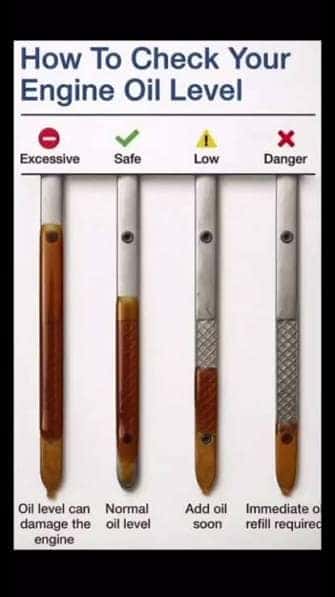
The dipstick slides out slowly.
Bentley watches closely. “That tiny thing matters?”
Her grandpa nods. “More than people realize.”…
More Than Just a Lubricant
Every automobile depends on oil.
While engines often receive the attention, motor oil quietly performs some of the most important jobs in a vehicle. It lubricates moving parts, reduces wear, helps cool the engine, prevents corrosion, cleans internal components, and allows the engine to operate efficiently.
Without oil, even the most advanced engine would fail within minutes.
The story of motor oil is closely tied to the history of the automobile itself. As engines became more powerful, more efficient, and more complex, oil evolved alongside them.
Before the Automobile
Long before automobiles existed, humans understood the importance of lubrication.
Ancient civilizations used substances such as:
- Animal fats
- Tallow
- Lard
- Olive oil
- Castor oil
To reduce friction between moving surfaces.
The Egyptians reportedly used lubricants when transporting massive stone blocks, while early machinery in Europe and Asia relied on natural oils and greases to reduce wear.
Although effective for simple machinery, these lubricants had significant limitations. They oxidized quickly, became unstable under heat, and offered little protection under heavy loads.
The Internal Combustion Engine Changes Everything
The development of the internal combustion engine during the late nineteenth century created a new challenge.
Unlike earlier machinery, engines generated:
- high temperatures
- significant pressure
- rapid moving parts
- continuous friction
The lubricants of the past were no longer sufficient.
Early automobiles experimented with various oils, including mixtures derived from:
- animal fats
- vegetable oils
- crude petroleum products
These lubricants often broke down quickly and left heavy deposits inside the engine.
Engine reliability was a constant concern.
The Rise of Petroleum-Based Oils
As the oil industry expanded during the late nineteenth and early twentieth centuries, petroleum-based lubricants emerged as the most practical solution.
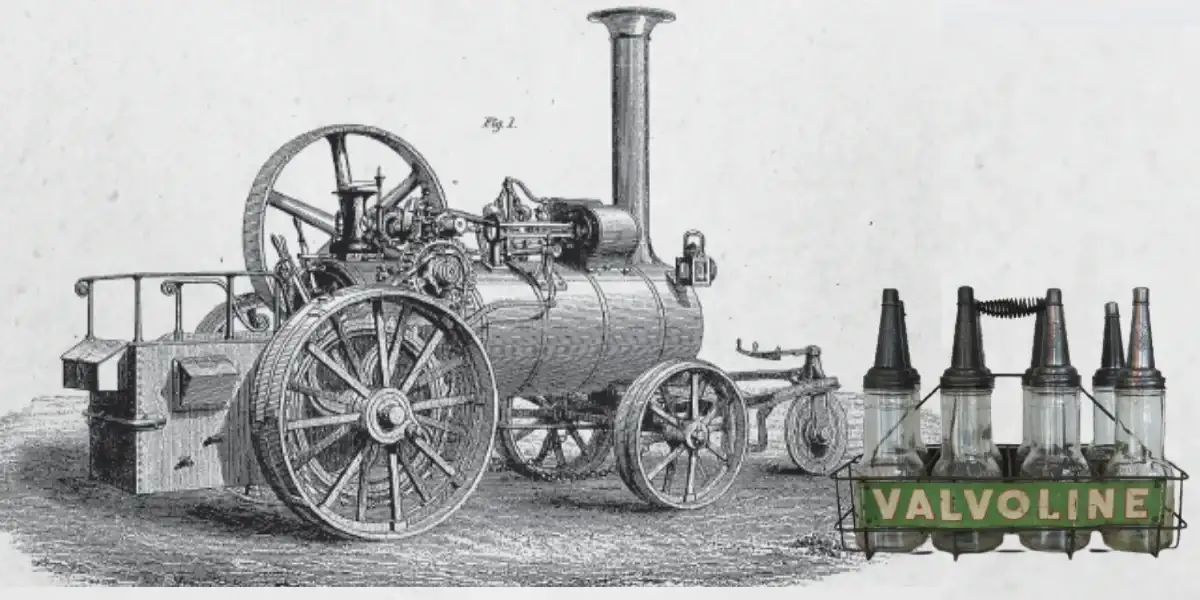
The modern petroleum industry is generally traced back to 1859, when Edwin Drake successfully drilled one of the first commercially viable oil wells in Titusville, Pennsylvania.
Initially, crude oil was valued primarily for producing kerosene for lighting. But as automobiles became more common, another petroleum product gained importance: lubricating oil.
Refined petroleum oils offered several advantages:
- Improved lubrication
- Better resistance to heat
- Greater availability
- Lower cost
These characteristics made them ideal for the rapidly growing automotive industry.
The Automobile Boom and Oil’s Importance
 The introduction of Karl Benz’s automobile in 1885 and Henry Ford’s Model T in 1908 transformed transportation.
As millions of vehicles appeared on roads around the world, demand for motor oil grew alongside gasoline.
Automakers quickly discovered that engines lasted longer and performed better when supplied with properly refined lubricants.
Motor oil became essential to:
- Reliability
- Engine durability
- Fuel efficiency
- Daily usability
Without major improvements in lubrication, mass automobile ownership would have been far more difficult to achieve.
The Early Challenges
Early motor oils were far from perfect.
Common problems included:
Poor Temperature Performance
Oil thickened dramatically in cold weather and thinned excessively in hot conditions.
Sludge Formation
Contaminants often accumulated inside engines, forming sludge that restricted oil flow.
Carbon Deposits
Combustion byproducts created deposits on pistons, valves, and spark plugs.
Limited Engine Protection
Metal components still experienced significant wear because early oils lacked many of the protective additives found today.
As engines became more powerful, solving these problems became a priority.
The Birth of Modern Motor Oil
The 1920s and 1930s saw major advances in petroleum refining.
Engineers developed methods that produced cleaner, more consistent base oils. At the same time, chemical additives were introduced to improve performance.
Among the most important innovations were:
Detergents
Helped keep engines clean by preventing deposit buildup.
Dispersants
Held contaminants in suspension until they could be removed during oil changes.
Anti-Wear Additives
Created protective barriers between metal surfaces.
Corrosion Inhibitors
Protected internal engine components from rust and chemical attack.
These improvements dramatically increased engine life and reliability.
World War II Accelerates Development
Like many automotive technologies, motor oil benefited from military research during World War II.
Aircraft engines, tanks, trucks, and naval vessels operated under extreme conditions that demanded improved lubricants.
The war accelerated advancements in:
- heat resistance
- wear protection
- oil stability
- additive technology
The lessons learned during this period would later influence civilian automobiles throughout the postwar era.
The Synthetic Revolution
One of the biggest milestones in oil history was the introduction of synthetic lubricants.
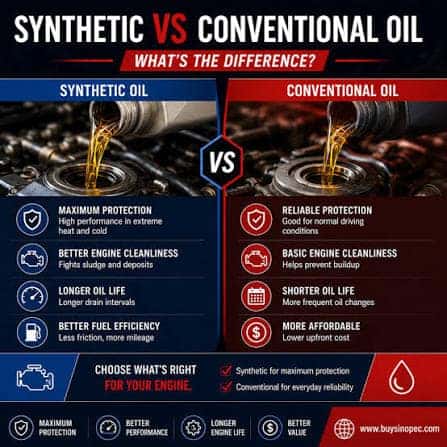
Unlike conventional oils refined directly from crude petroleum, synthetic oils are chemically engineered to provide specific performance characteristics.
Synthetic oils offered:
- Superior temperature stability
- Better cold-start protection
- Improved wear resistance
- Lower evaporation rates
- Longer service intervals
Initially developed for military and aviation applications, synthetic oils began reaching consumers during the 1970s.
Over time, they became increasingly common in passenger vehicles.
Understanding What Oil Actually Does
Many people think motor oil’s only job is lubrication.
In reality, it performs several critical functions simultaneously.
Lubrication
A thin film of oil prevents metal components from contacting one another directly.
Cooling
Oil absorbs heat from areas coolant cannot easily reach, such as pistons and bearings.
Cleaning
Detergents and dispersants help remove contaminants and prevent sludge buildup.
Corrosion Protection
Oil coats internal surfaces, protecting them from moisture and oxidation.
Sealing
Oil helps piston rings create a better seal against cylinder walls, improving efficiency.
Every second an engine operates, oil is working continuously to protect it.
The Evolution of Oil Grades
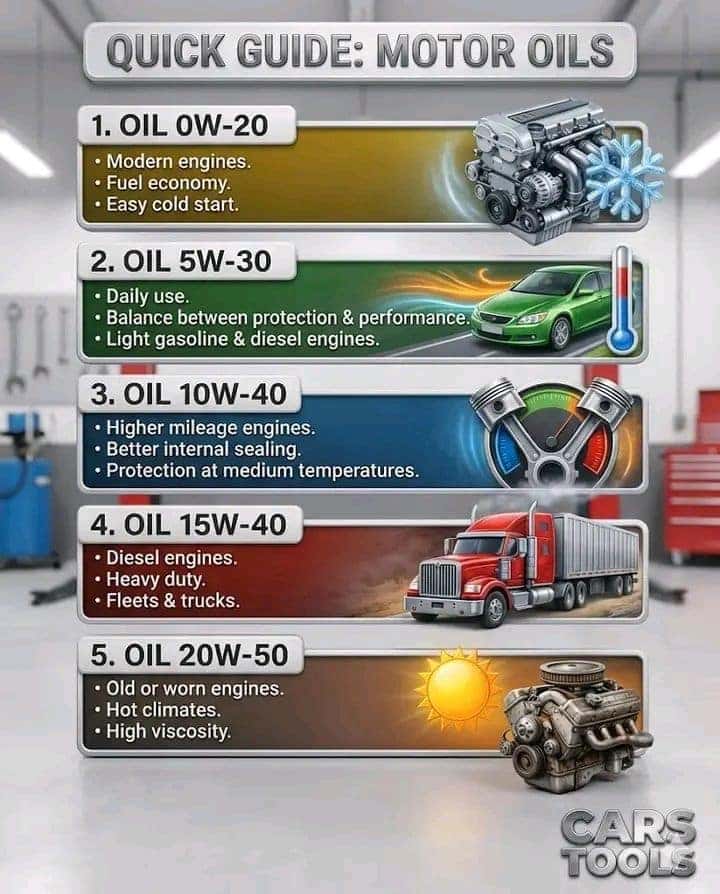
As engines became more advanced, oil viscosity became increasingly important.
Viscosity describes how easily a fluid flows.
Early automobiles often required different oils depending on the season.
For example:
- Thinner oil for winter
- Thicker oil for summer
The development of multigrade oils solved this problem.
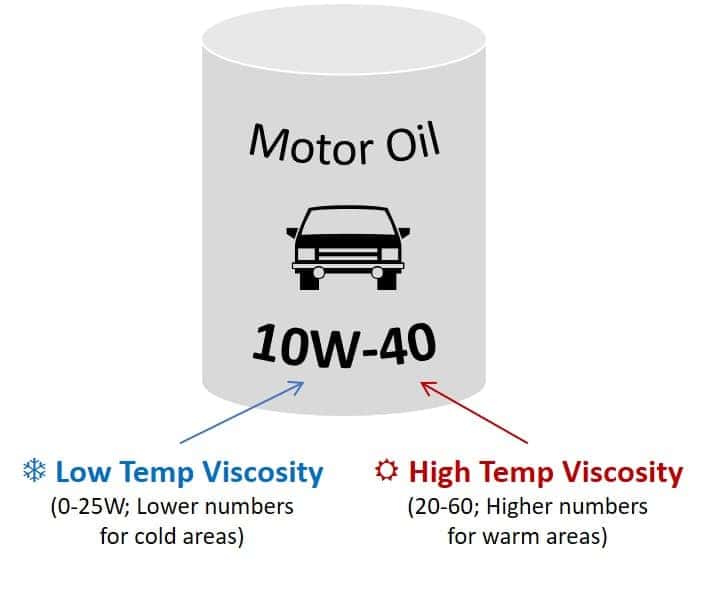
A modern oil labeled 10W-40 behaves:
- Like a 10-weight oil during cold starts
- Like a 40-weight oil at operating temperature
This innovation improved year-round performance and simplified maintenance.
Modern Engines Demand Specialized Oils
Today’s engines place far greater demands on lubrication than those of the past.
Modern vehicles feature:
- Turbochargers
- Direct injection
- Variable valve timing
- Higher operating temperatures
- Stricter emissions standards
As a result, oil formulations have become highly specialized.
Manufacturers now design oils tailored to:
- Specific engine designs
- Fuel economy targets
- Emissions systems
- Operating conditions
Using the correct oil has never been more important.
The Future of Motor Oil
Even as electric vehicles gain popularity, lubricant technology continues to evolve.
Future developments may include:
- Extended-life synthetic oils
- Bio-based lubricants
- Improved sustainability
- Fluids designed specifically for hybrid and electric drivetrains
The goal remains the same as it was over a century ago:
Reduce friction, protect machinery, and keep vehicles moving.
Why It Still Matters at Mills Auto Group
Throughout automotive history, few maintenance items have been as important—or as overlooked—as motor oil. From the earliest petroleum-based lubricants to today’s advanced synthetic formulations, oil has played a critical role in engine reliability, performance, and longevity.
At Mills Auto Group, being Trusted for Generations means helping customers understand the systems that protect their vehicles and keeping those systems operating as designed. Regular oil changes and proper maintenance remain some of the most important investments a driver can make in the long-term health of a vehicle.
The engine may be the heart of an automobile, but motor oil is its lifeblood. For more than a century, it has quietly protected the machines that move people, goods, and entire economies—and it continues to do so every time a vehicle starts and heads down the road.
Closing Scene…
…She screws the cap back on, careful not to overtighten.
“Keeping things from rubbing the wrong way,” she says.
He smiles. “That applies to more than engines.”
To Be Continued…
 Armor Lubricants. “Where Does Engine Oil Go? How Engine Oil Works?” Armorlubricants.Com, Armor Lubricants, 7 Apr. 2026, https://armorlubricants.com/blog/how-engine-oil-works-complete-guide. Accessed 17 July 2026.
BBC. “How Did Oil Come to Run Our World?” BBC Teach, 2025, https://www.bbc.co.uk/teach/articles/zn6gnrd. Accessed 17 July 2026.
Haroon, Jennifer. “When Was Motor Oil Invented? The Birth of Lubrication – CarsBibles.” Car Bibles, 28 July 2025, https://carsbibles.com/when-was-motor-oil-invented/. Accessed 17 July 2026.
Muir, Alex. “Engine Oil and Motor Oil – How It Works.” How a Car Works, 2026, https://www.howacarworks.com/engine-oil. Accessed 17 July 2026.










0 comment(s) so far on It’s Worth the Drive – S3E8: Grease Lightning