


It’s Worth the Drive – S3E1: The Heart That Beats
Episode 1 – The Heart That Beats
The Garage, A Few Years Later
The garage smells the same.
Oil. Dust. Something metallic and familiar.
Bentley stands just inside the door, gloves already on, too big for her hands but worn proudly anyway. She watches her grandpa lift the hood, the metal creaking softly as it opens.
“What does all of it do?” she asks.
He smiles, leans on the fender for a moment, and looks at the engine like it’s an old friend.
“Well,” he says, “nothing works alone.”
Opening Scene…
Bentley peers into the open engine bay, brow furrowed in concentration.
“It looks… busy,” she says.
Her grandpa chuckles. “That’s one way to put it.”
He points slowly, careful not to overwhelm her. Pistons. Valves. Belts. Parts moving so fast you can’t see them — only feel them when they’re working right.
“This,” he says, resting a hand on the engine cover, “is the heart.”…
The Engine as the Heart of the Automobile
At its core, the car engine exists for one purpose: to convert energy into motion. How that energy is created, controlled, and delivered has changed dramatically over the past 150 years, but the goal has remained the same—to move people farther, faster, and more reliably.
The evolution of the car engine mirrors the evolution of society itself. From early experimentation with steam power to today’s electronically managed powertrains, engine development reflects advances in engineering, materials, energy use, and environmental awareness.
Steam Power: The First Mechanical Motion
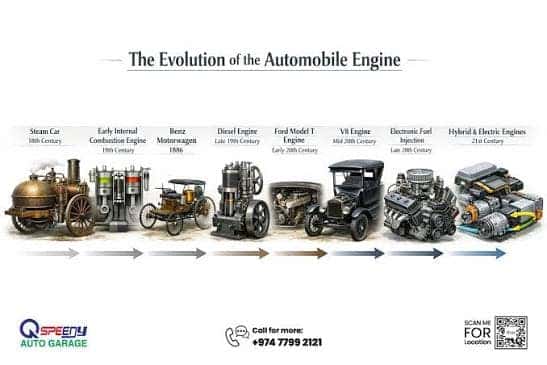
Before gasoline engines defined transportation, steam power was the dominant technology for mechanical movement.
In the late 1700s, inventors such as Nicolas‑Joseph Cugnot built steam‑powered road vehicles capable of moving under their own power. These early machines relied on external combustion—fuel burned outside the engine to produce steam, which then drove pistons or turbines.
While revolutionary, steam vehicles had major drawbacks:
- long warm‑up times
- heavy components
- frequent refueling and water replenishment
- limited range and control
Steam engines proved that self‑propelled road vehicles were possible—but not yet practical.
The Internal Combustion Breakthrough
The true turning point came with internal combustion, where fuel is burned inside the engine’s cylinders.
In 1876, Nikolaus Otto perfected the four‑stroke combustion cycle, which remains the foundation of most gasoline engines today. This design was significantly smaller, faster, and more efficient than steam systems.
Just a decade later, Karl Benz applied this technology to a self‑propelled vehicle, earning his 1886 patent often recognized as the birth of the modern automobile.
How a Gasoline Engine Works
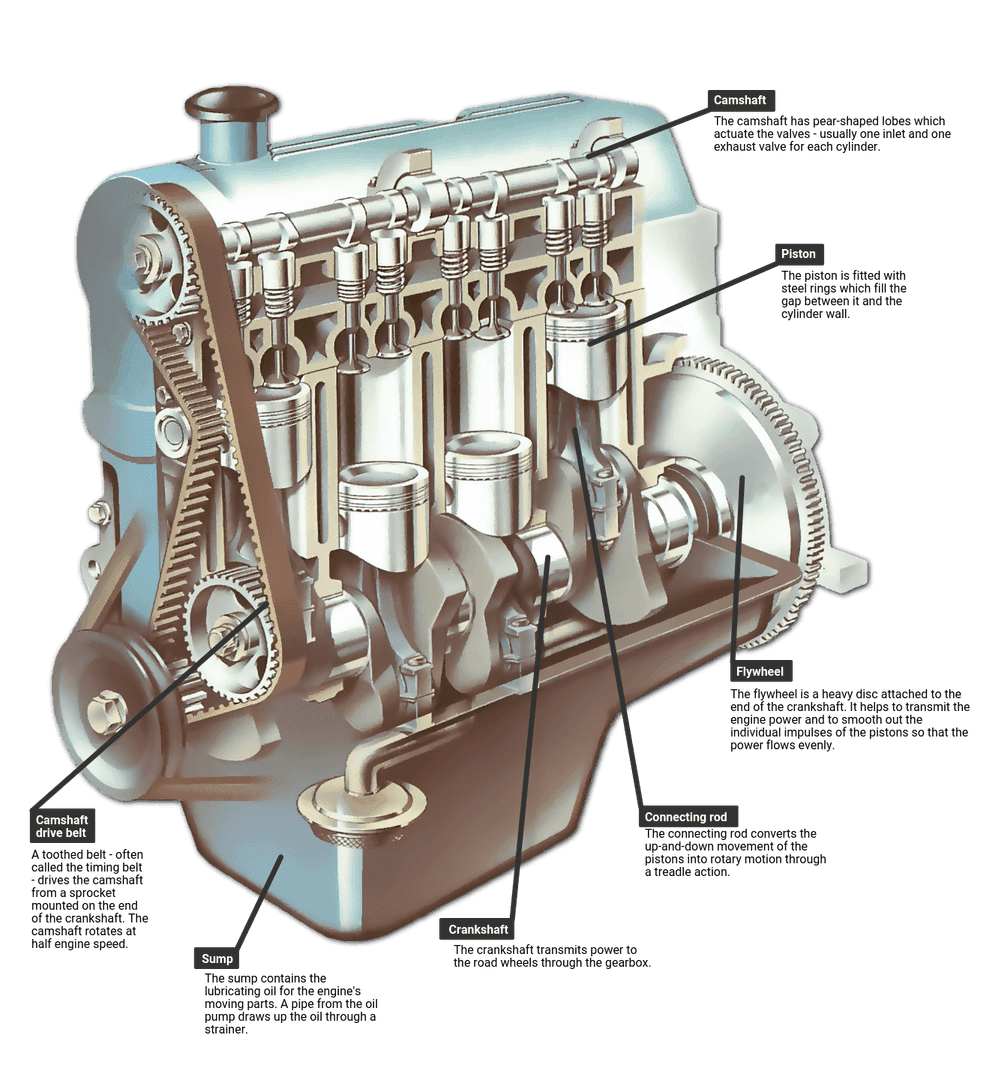
Most gasoline engines operate on the four‑stroke (Otto) cycle:
- Intake – Air and fuel enter the cylinder
- Compression – The mixture is compressed for efficiency
- Combustion – A spark ignites the mixture, pushing the piston down
- Exhaust – Burned gases exit the cylinder
The up‑and‑down motion of the pistons is converted into rotational motion by the crankshaft, which ultimately turns the wheels.
This basic principle has remained unchanged for more than a century—even as engines became more powerful, cleaner, and more durable.
Growth of the Gasoline Engine
Early engines were simple, often single‑cylinder designs producing minimal power. As vehicles became heavier and expectations rose, engineers introduced:
- multi‑cylinder layouts (inline, V‑shaped, flat)
- improved ignition systems
- carburetors for better air‑fuel mixing
- stronger materials for higher speeds
The Ford Model T, introduced in 1908, proved that reliable gasoline engines could be mass‑produced, making cars affordable for everyday drivers.
Diesel Engines: Efficiency and Torque

Invented by Rudolf Diesel, diesel engines use compression ignition rather than spark plugs. By compressing air until it becomes hot enough to ignite fuel, diesel engines achieve higher thermal efficiency.
Diesels became popular for:
- trucks and buses
- industrial equipment
- European passenger cars focused on fuel economy
Turbocharging later helped diesel engines become quieter, cleaner, and more powerful, expanding their use in everyday vehicles.
Electronics Change the Engine Forever
The late 20th century introduced electronics that transformed engines from mechanical systems into computer‑controlled machines.
Fuel Injection Replaces Carburetors
Electronic fuel injection (EFI) uses sensors and an Engine Control Unit (ECU) to deliver precise amounts of fuel. This improved:
- fuel economy
- cold starting
- emissions control
- performance consistency
Electronic Ignition and Engine Management
Mechanical distributors gave way to electronic ignition systems, allowing precise spark timing under all conditions. Combined with oxygen sensors and catalytic converters, this era dramatically reduced emissions while increasing engine longevity.
More Power, Less Fuel
Engineers developed technologies to improve performance without increasing engine size:
- Turbochargers & superchargers force more air into cylinders
- Variable valve timing adjusts airflow dynamically
- Lighter materials reduce internal resistance
- Intercoolers cool compressed air for denser combustion
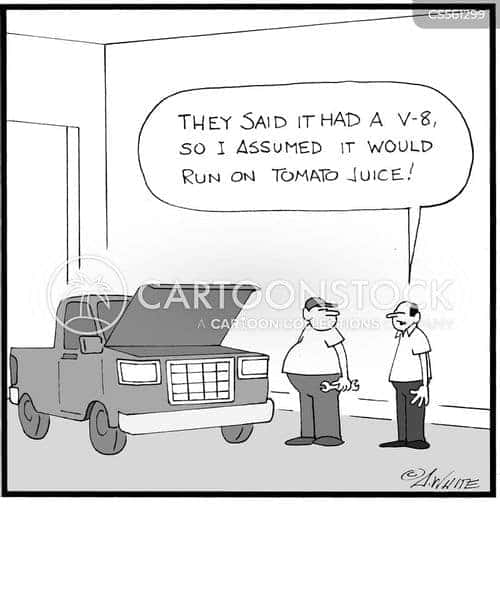
These innovations made it possible for modern four‑cylinder engines to deliver power once expected only from V6 or V8 designs.
Hybrid and Electric Powertrains
In the late 20th and early 21st centuries, efficiency and environmental concerns reshaped engine development.
Hybrids
Hybrid vehicles combine internal combustion engines with electric motors, using electronics to optimize energy use. Regenerative braking and electric assist reduce fuel consumption while retaining familiar driving behavior.
Electric Vehicles
Battery‑electric vehicles eliminate combustion, using electric motors for near‑instant torque and zero tailpipe emissions. While EVs lack traditional engines, their development represents the next chapter in propulsion evolution.
The Future of the Engine
Engine innovation continues in multiple directions:
- hydrogen combustion and fuel cells
- synthetic fuels compatible with existing engines
- advanced combustion concepts like HCCI
- AI‑driven engine management
While electrification grows, internal combustion remains deeply embedded in global transportation, especially where infrastructure and usage demands vary.
Why It Still Matters at Mills Auto Group
The engine is still the defining component of any vehicle, whether mechanical, hybrid, or electric. Understanding how engines evolved helps drivers appreciate what they’re driving—and why modern vehicles perform as they do.
At Mills Auto Group, being Trusted for Generations means helping customers understand not just what powers their vehicle, but how and why. From proven gasoline engines to advanced hybrid systems and electric drivetrains, that knowledge supports better choices, smarter ownership, and confidence in the road ahead.
From steam boilers to software‑controlled powertrains, the engine’s story is ultimately about progress—and it continues to drive us forward.
Closing Scene…
…the hood lowers with a solid, reassuring thump.
Bentley wipes her hands on a rag, leaving a dark streak behind. She grins.
“So if the engine’s the heart,” she says, “the rest is like… the bones and stuff?”
He laughs. “Something like that.”
She looks back at the car, seeing it differently now — not as a mystery, but as a system.
To be Continued…
Brain, Marshall, and Kristen Hall-Geisler. “How Car Engines Work.” HowStuffWorks, 5 Apr. 2000, auto.howstuffworks.com/engine.htm.
ltp123. “The History and Evolution of Car Engines | Live to Plant.” Livetoplant.com, 6 July 2025, livetoplant.com/the-history-and-evolution-of-car-engines/.
Thermo History. “From Steam to Combustion: The Evolution of the Car Engine.” Thermo History, 2026, thermohistory.org/from-steam-to-combustion-the-evolution-of-the-car-engine/.









0 comment(s) so far on It’s Worth the Drive – S3E1: The Heart That Beats