


It’s Worth the Drive – S2E9: When Cars Learned to Think
Episode 9 — When Cars Learned to Think
The Story Continues…
The drive is almost over.
Bentley watches the dashboard as the car slows, noticing a small light flicker on, then disappear.
“What was that?” she asks.
“The car is checking itself,” Grandpa says.
Bentley thinks for a moment. “Cars didn’t always do that, did they?”
Grandpa smiles. “No. For a long time, people just guessed.”…
When Cars Were Purely Mechanical
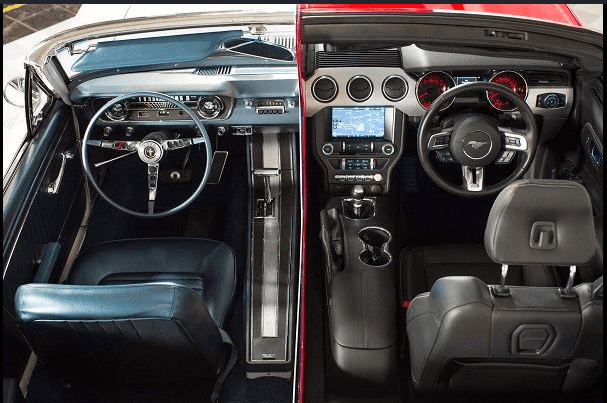
Early automobiles were entirely mechanical. Engines were hand‑cranked, lighting was minimal, and there were no electronic systems to assist drivers. Operating a car required physical effort, mechanical knowledge, and constant attention.
As automobiles became more common in the early 20th century, it became clear that reliability, safety, and ease of use would require something more than gears, levers, and cables.
That “something” was electricity.
The First Electrical Breakthroughs
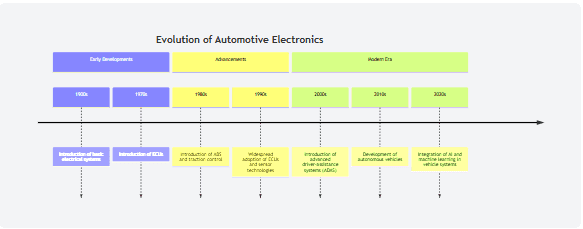
The introduction of basic electrical systems marked the first major shift in automotive design.
The Electric Starter
Before electric starters, drivers had to manually crank engines—an action that was inconvenient and sometimes dangerous. In 1911, Charles Kettering introduced the electric starter for the Cadillac Motor Company, replacing the hand crank with a DC electric motor.
This innovation dramatically improved safety and accessibility. Its core principle remains largely unchanged today, though modern vehicles now use advanced systems such as integrated starter‑generators to improve efficiency.
Lighting the Road Ahead
Early vehicles relied on oil or acetylene lamps, which were unreliable and required constant maintenance. In 1898, the Columbia Electric Car became the first automobile to feature electric headlamps.
By 1912, Cadillac introduced a fully integrated electrical system, combining starter, ignition, and lighting. This set the standard for modern automotive electrical architecture and made nighttime driving safer and more practical.
Electronics Begin to Take Control
As electrical systems became standard, engineers began exploring how electronics could improve vehicle performance and safety.
Fuel Injection Replaces Carburetors
Early engines used carburetors to mix fuel and air, a process that was imprecise and inefficient. In the 1950s and 1960s, electronic fuel injection (EFI) emerged as a more accurate alternative.
With systems like Bosch Jetronic, introduced in 1967, electronic control units (ECUs) began managing fuel delivery using sensor data. This improved performance, reduced emissions, and increased fuel efficiency.
Fuel injection systems evolved from simple single‑point designs to today’s advanced multi‑point and direct injection systems.
Electronics Make Driving Safer
One of the most important applications of automotive electronics has been safety.
Anti‑Lock Braking Systems
Before ABS, hard braking could lock wheels, causing skidding and loss of steering control. Introduced in production vehicles in the early 1970s, anti‑lock braking systems used wheel‑speed sensors and an ECU to modulate brake pressure during emergency stops.
This allowed drivers to maintain control while braking. ABS later became the foundation for traction control and electronic stability control, dramatically improving vehicle safety.
Cars Learn to Diagnose Themselves
Onboard Diagnostics
As vehicles grew more complex, diagnosing problems became more difficult. Early onboard diagnostic systems appeared in the 1980s, offering limited insight.
The real breakthrough came in the mid‑1990s with OBD‑II, which standardized diagnostic ports and fault codes. OBD‑II allows technicians to access real‑time data such as engine speed, temperature, throttle position, and sensor performance—improving reliability and emissions control.
The Cabin Goes Digital
As consumer electronics advanced, expectations for in‑car technology followed.
Infotainment Systems
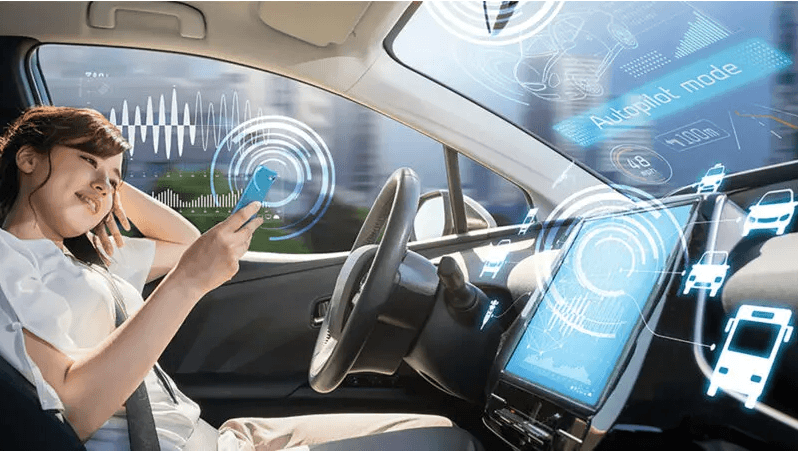
What began as simple AM/FM radios evolved into fully integrated infotainment systems. Modern interfaces combine navigation, media, climate control, smartphone connectivity, voice recognition, and wireless updates into a central control hub.
Infotainment systems now interact with other vehicle systems, becoming an extension of the car’s electronic architecture rather than a standalone feature.
Assisting the Driver—and Sometimes Replacing Them
Advanced Driver Assistance Systems (ADAS)
The most significant recent development in automotive electronics is ADAS. Using cameras, radar, and sensors, these systems assist drivers with:
- adaptive cruise control
- lane‑keeping assistance
- collision warnings
- automatic emergency braking
Some systems, such as Cadillac Super Cruise and Tesla Autopilot, allow limited hands‑free operation under specific conditions, marking a major step toward autonomy.
The Shift to Electric and Connected Vehicles
Electric and Hybrid Powertrains
Electric and hybrid vehicles rely heavily on electronics to manage battery systems, motors, regenerative braking, and energy flow. Battery management systems (BMS) and motor controllers are now central to vehicle operation.
Vehicle‑to‑Everything (V2X)
Emerging V2X communication allows vehicles to interact with other cars, infrastructure, networks, and pedestrians. These systems aim to reduce accidents, improve traffic flow, and increase efficiency through real‑time data sharing.
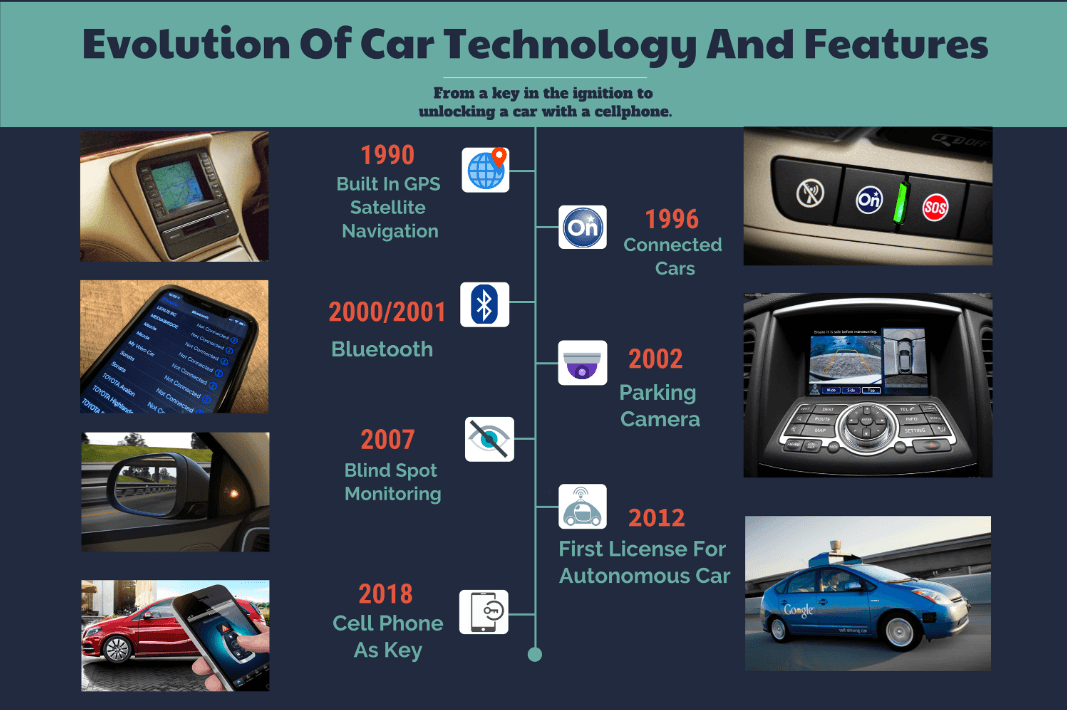
The Road to Autonomy
Autonomous driving represents the most ambitious goal of automotive electronics. Achieving it requires:
- multiple sensor types (camera, radar, lidar)
- advanced software and AI
- real‑time communication and redundancy
While today’s vehicles reach Level 2 or Level 3 autonomy, full autonomy remains a significant engineering challenge.
Why It Still Matters at Mills Auto Group
Modern vehicles are no longer defined solely by mechanical parts—they are defined by electronics, software, and connectivity. Understanding how these systems evolved helps drivers appreciate how their vehicles operate, how safety systems assist them, and why proper maintenance matters more than ever.
At Mills Auto Group, being Trusted for Generations means helping customers navigate this complexity with confidence. Whether it’s understanding advanced safety features, diagnosing electronic systems, or preparing for the future of electric and connected vehicles, knowledge remains a key part of ownership.
From the first electric starter to today’s software‑driven cars, automotive electronics have reshaped how we drive—and how we trust the machines that move us.
Closing Scene…
…they turn into the driveway.
The engine idles calmly. Bentley watches the gauges settle.
“So once cars started noticing things,” she says, “people learned more too.”
Grandpa nods. “That’s how it started.”
The engine hums softly, holding the thought as they sit a moment longer.
To be Continued…
 Dale, Gabija. “From Analog to Digital: A History of Car Electronics and Their Evolution | Jim Meyer Racing.” Jim Meyer Racing, 16 Dec. 2025, www.jimmeyerracing.com/history-of-car-electronics/.
Gudge-Andracki, Jacob. “From Cranks to Computers: The Evolution of Car Tech.” AutoBidMaster, 2 July 2025, blog.autobidmaster.com/2025/07/the-evolution-of-car-tech/.
Lee, Sarah. “The Evolution of Automotive Electronics.” Numberanalytics.com, 2025, www.numberanalytics.com/blog/evolution-automotive-electronics. Accessed 15 Apr. 2026.
Monolithic Power Systems. “Evolution of Electronics in Automotive Systems.” Monolithicpower.com, 2024, www.monolithicpower.com/en/learning/mpscholar/automotive-electronics/introduction/evolution-of-electronics-in-automotive-systems.









0 comment(s) so far on It’s Worth the Drive – S2E9: When Cars Learned to Think