


It’s Worth the Drive – S2E7: Fifty Shades of the Fast and Furious
Episode 7 — Fifty Shades of the Fast and Furious
The Story Continues…
Bentley points excitedly. “That car’s green!”
Her grandpa talks about eras—bright colors, chrome optimism, then practicality. How paint changed as tastes and technology did…
Color as Identity on Wheels
Since their earliest days, automobiles have been more than machines. They have reflected how people see themselves—and how they want to be seen. Alongside design and performance, color has always been one of the most visible ways cars express identity, optimism, restraint, rebellion, or technological progress.
As cars evolved, so did the meaning of their colors. Over the past 135 years, the automotive industry has responded to social change, economic conditions, regulation, and technology—often using color as its most immediate signal.
The Birth of the Automobile—and Practical Paint
When Carl Benz patented his motor vehicle in 1886, automobiles were essentially motorized carriages. Early paint technology was borrowed directly from horse‑drawn vehicles and relied on oil‑based coatings that took weeks to dry. These finishes faded quickly and required frequent repainting.
Color choice was limited by chemistry, not creativity. Black, dark green, and gray dominated because they were easier to apply and maintain.
When Henry Ford introduced mass production in 1908, speed mattered more than style. Black paint dried fastest, enabling assembly‑line efficiency. For years, color was a production decision—not a personal one.
Breaking the Black Mold: The 1920s and 1930s
By the 1920s, advances in quick‑drying lacquer paints allowed manufacturers to offer more variety. In 1926, Ford finally introduced the Model T in brown, signaling the beginning of broader color choice.
The economic crash at the end of the decade ushered in muted palettes. Greens, grays, navy, and maroon became common. Early metallic paints appeared in the 1930s, originally using fish scales before aluminum flakes replaced them.
Color was returning—but cautiously.
Post‑War Optimism and the Color Explosion
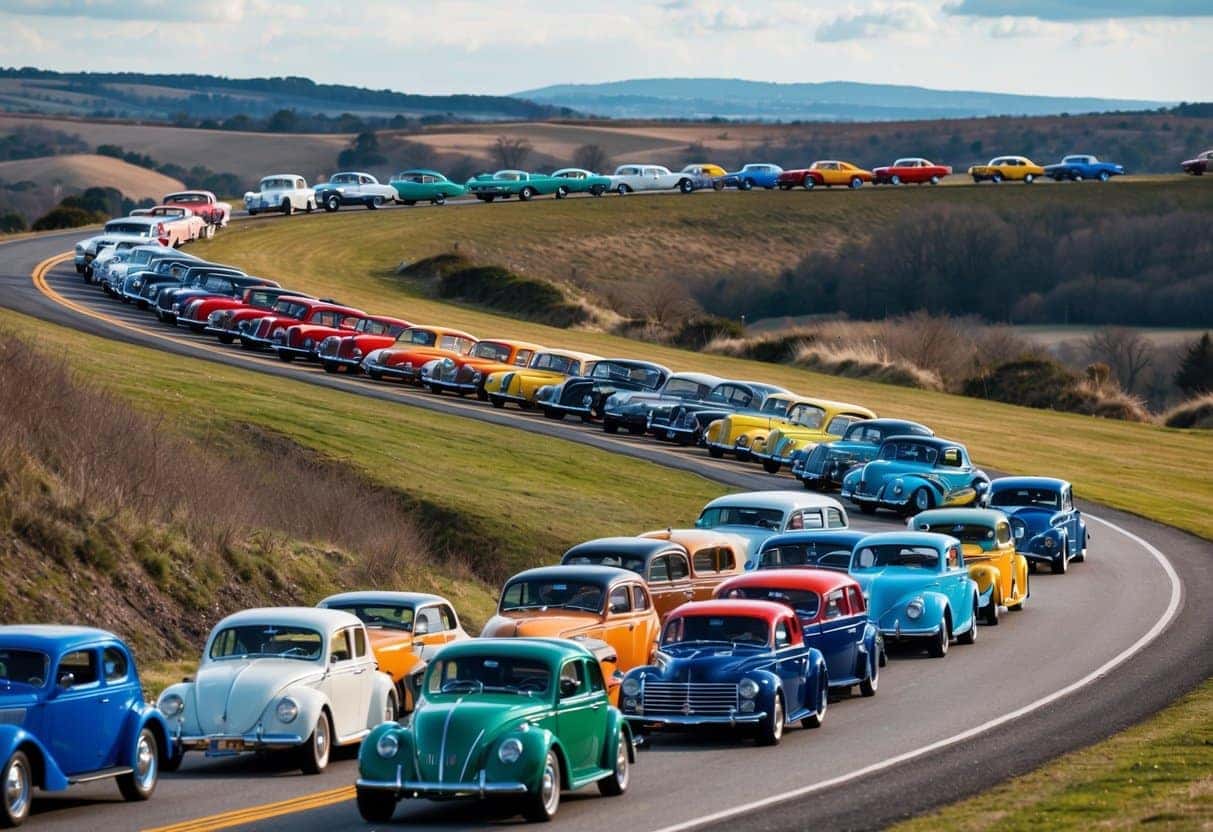
After World War II, color reflected prosperity.
The 1950s introduced bright pastels, two‑tone paint schemes, and chrome accents. Seafoam green, coral pink, baby blue, and butter yellow became icons of the era. Automobiles were no longer just transportation—they were expressions of success and optimism.
By the mid‑1950s, Daimler‑Benz offered dozens of colors and two‑tone combinations, reflecting the growing role of fashion in automotive design.
Bold Statements: The 1960s
The 1960s embraced richer, deeper hues and more expressive finishes. Metallic paints became more sophisticated. Muscle cars introduced high‑impact colors—Grabber Blue, Hugger Orange, British Racing Green—that matched aggressive styling and performance.
Color names became part of the appeal. Paint wasn’t just visual—it was marketing.
Earth Tones and Experimentation: The 1970s
The 1970s reflected a mix of environmental awareness and cultural experimentation. Browns, rusts, golds, and muted greens dominated, often with a gray undertone that made them feel manufactured rather than natural.
At the same time, muscle cars continued to push bold colors like Plum Crazy Purple and Hemi Orange. Vinyl roofs added contrast, creating a two‑tone look without repainting entire vehicles.
Technology and Neutrality: The 1980s and 1990s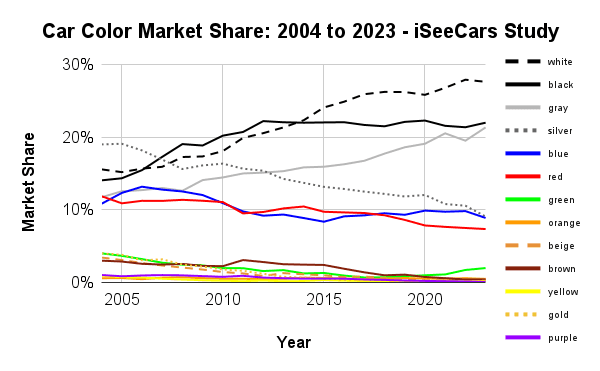
By the 1980s, metallic and pearl finishes advanced rapidly. Two‑coat systems became standard, improving durability and depth. Color palettes shifted toward restraint.
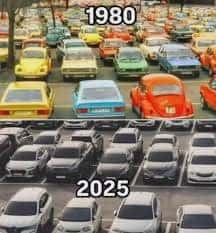
White, black, gray, and silver rose in popularity—driven by resale value, professional aesthetics, and globalization. Red remained the one widely accepted “expressive” color.
Interestingly, the 1990s saw a brief resurgence of green, accounting for over 20% of North American sales at its peak.
The Digital Age: 2000s to Today
Modern automotive color reflects both technology and caution. Matte finishes, glass flakes, and color‑shifting paints emerged alongside advanced manufacturing and environmental regulations.
Despite these innovations, neutral colors dominate today’s roads. White, black, gray, and silver account for the majority of vehicles sold. Subtle variations—pearlescent whites, metallic grays, muted blues—allow distinction without risk.
Electric vehicles introduced new color philosophies, often signaling futurism or sustainability through light tones and clean finishes.
What Color Says About Us
Car colors act as cultural time stamps. Pastels reflect post‑war optimism. Earth tones mirror environmental awareness. Neutrals reflect caution, efficiency, and resale logic.
Family photos featuring cars often reveal as much about their era as clothing or architecture. Color tells the story—quietly but clearly.
Looking Forward
Future automotive colors will be shaped by:
- sustainability regulations
- smart paints and heat‑reflective coatings
- interaction with sensors and driver‑assistance systems
- personalization through technology
While innovation continues, one constant remains: color will always balance self‑expression and practicality.
Why It Still Matters at Mills Auto Group
Color is one of the first things people notice about a vehicle—and one of the longest‑lasting impressions it makes. It influences pride of ownership, emotional connection, and how a vehicle fits into everyday life.
At Mills Auto Group, understanding the history of automotive color helps customers see beyond trends to what suits them best. Whether choosing a timeless neutral or a bold personal statement, color remains a key part of how a vehicle is experienced over time.
Being Trusted for Generations means recognizing that cars reflect who we are—today and tomorrow—and helping people choose vehicles that feel right long after they leave the lot.
Closing Scene…
…Bentley considers this. “So cars kind of dress like people do.”
Grandpa smiles. “They always have.”
To be Continued…

Automotive OEM Coatings. “History of Automotive Colors | PPG Auto Coatings.” Ppg.com, 2026, www.ppg.com/en-US/autocoatings/color/history-of-color.
Karo. “Decades in Review: The Evolution of Car Color Palettes.” Engine Stories –, 31 Mar. 2025, enginestories.com/history/car-colors-through-the-decades-what-your-grandparents-cars-reveal-about-their-era/#google_vignette. Accessed 14 Apr. 2026.
Teague, Chris. “A History of Automotive Paint Colors – Kelley Blue Book.” Kelley Blue Book, 23 Jan. 2026, www.kbb.com/car-advice/automotive-paint-color-history/?msockid=165c70215f2e6bdf032167075e376a1b. Accessed 14 Apr. 2026.
The Garage. “Color Story – Automotive Paint Trends by Decade.” The GarageTM, 27 Jan. 2025, www.eastwood.com/garage/color-story-automotive-paint-trends-by-decade/?cjevent=e393b0fe382611f18229002a0a82b838&SRCCODE=1108620. Accessed 14 Apr. 2026.









0 comment(s) so far on It’s Worth the Drive – S2E7: Fifty Shades of the Fast and Furious