


It’s Worth the Drive – S2E5: Trust at 30 Miles-Per-Hour
Episode 5 — Trust at 30 Miles-Per-Hour
The Story Continues…
They pass a car making a cautious turn.
Bentley watches closely. “They look nervous,” she says.
Grandpa explains mirrors, spacing, and how new drivers think about everything all at once—and how patience matters more than perfection…
When Driving Was Learned by Doing
From the moment automobiles appeared, people had to learn how to drive them. There were no manuals, no courses, and no tests. Early drivers relied on trial and error, advice from mechanics, or instruction from someone who had driven before.
The first recorded traffic fatality in the United States occurred in New York City in 1899, underscoring that driving required skills beyond simply operating a machine. As automobiles spread in the early 20th century, it became clear that shared roads required shared expectations.
Learning to drive would eventually need structure.
Licenses Before Lessons
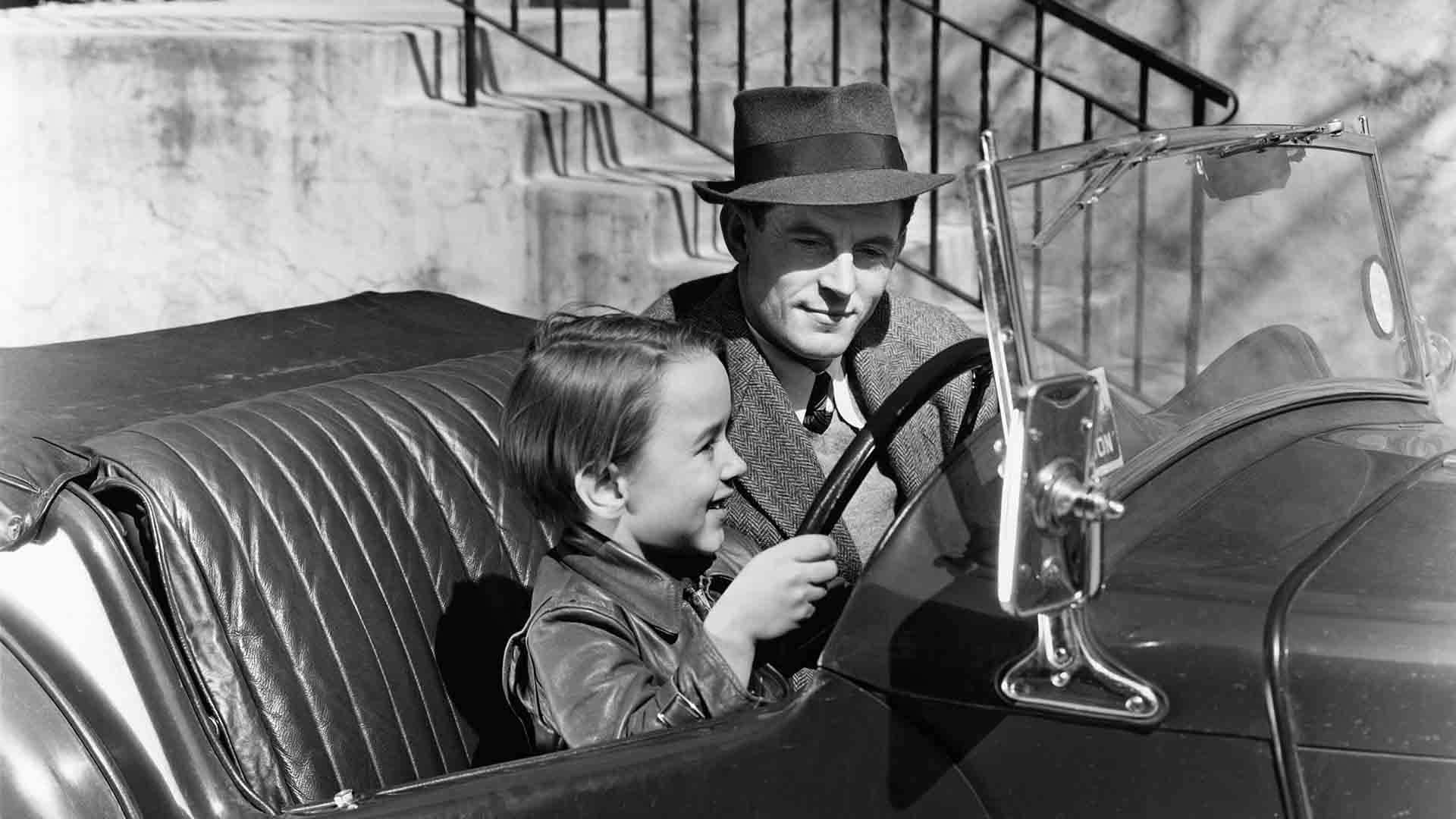
The earliest driver’s licenses were administrative rather than instructional. In 1903, Massachusetts became the first state to issue licenses, but no test was required. Applicants paid a fee and provided basic information.
At this stage, the responsibility for learning fell entirely on the driver and whoever was willing to teach them. Instruction typically began with understanding basic controls—steering, throttle, and braking—often on quiet roads or open land.
What we now call “vehicle familiarization” was simply common sense.
Why Testing Changed Everything
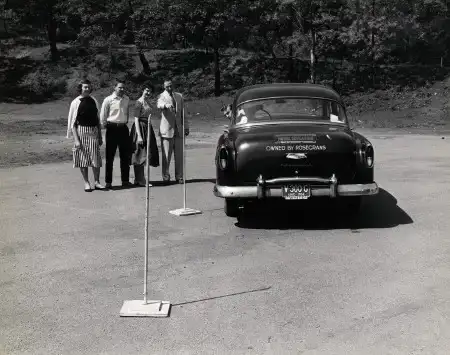
As traffic increased, accidents became more frequent. In 1935, Missouri introduced the first mandatory driving test in the United States. This marked a turning point: driving was no longer just a personal skill, but a public responsibility.
Once testing existed, people needed a way to prepare. Driving schools began to appear, offering structured instruction in traffic laws, vehicle control, and road awareness.
Learning to drive became something you practiced intentionally—not something you figured out along the way.
Driving Goes to School
By the late 1920s, school districts in Pennsylvania and Michigan began offering driver education courses to high school students. These early programs varied widely in content.
To bring consistency, Professor Amos Neyhart of Pennsylvania State University developed the first standardized high school driver education curriculum in 1934. His approach combined classroom instruction with behind‑the‑wheel training, establishing a model still used today.
By the 1950s, driver education was common in American high schools. Instruction focused on:
- traffic laws
- safe driving techniques
- basic vehicle operation
- routine maintenance
This is where the familiar structure emerged: learn the rules first, then practice in controlled settings.
Starting With the Car, Not the Road
Historically—and still today—effective instruction begins before the vehicle moves.
Students were taught to adjust seats and mirrors, identify dashboard controls, and understand warning lights. Knowing where the headlights, wipers, emergency flashers, and parking brake were located was considered essential before driving in traffic.
This phase reflected a growing understanding: confidence behind the wheel begins with familiarity, not motion.
Practice Without Pressure
Early driver education programs emphasized learning vehicle behavior in low‑risk environments. Parking lots and quiet streets allowed students to practice:
- starting and stopping smoothly
- steering and turning
- backing up
- judging distance
These exercises built muscle memory and spatial awareness, the same skills early drivers had to develop instinctively, now taught deliberately.
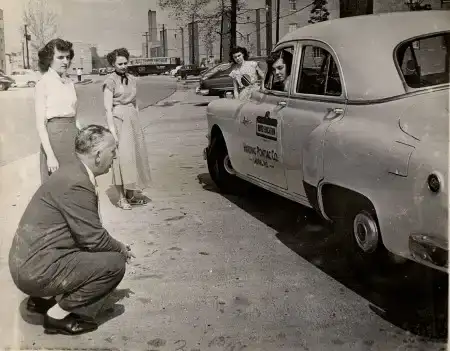
Progression mattered. Mastery came through repetition, not speed.
Teaching Judgment, Not Just Control
By the 1960s, driver education expanded beyond mechanics. Programs began addressing the psychological aspects of driving, including:
- fatigue
- emotional stress
- distraction
- substance impairment
This shift acknowledged that many driving decisions are made long before a pedal is pressed or a wheel is turned.
Students were taught to scan ahead, maintain safe following distances, and anticipate hazards—skills that remain central to defensive driving today.
From Neighborhood Streets to Faster Roads
As students gained confidence, instruction moved to busier roads. Learning to navigate intersections, determine right of way, and share the road with pedestrians, cyclists, and buses became essential.
Highway driving introduced a new set of skills:
- merging at speed
- checking blind spots
- reading signs and exits
- maintaining larger safety spaces
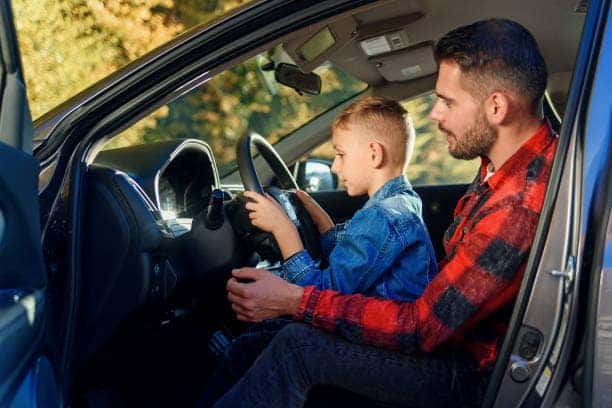
Historically, this mirrored the evolution of roads themselves—from local streets to higher‑speed routes requiring greater awareness and planning.
When Technology Changed How We Learn
By the late 20th century, many public schools reduced driver education programs due to cost. Private driving schools and online education expanded to fill the gap.
Online courses allowed students to learn at their own pace, revisit difficult topics, and access instruction without traveling to a classroom. Simulations, videos, and interactive tools became common.
While technology changed delivery, the fundamentals remained the same: knowledge, practice, and judgment.
Knowing When a Driver Is Ready
There has never been a single moment that defines readiness. Legal age requirements establish a minimum, but readiness depends on consistency, awareness, and decision‑making.
Historically, supervision continued until drivers demonstrated calm responses in varied conditions—night driving, bad weather, different vehicles, and the presence of passengers.
That principle has not changed.
Where Driver Education Is Headed
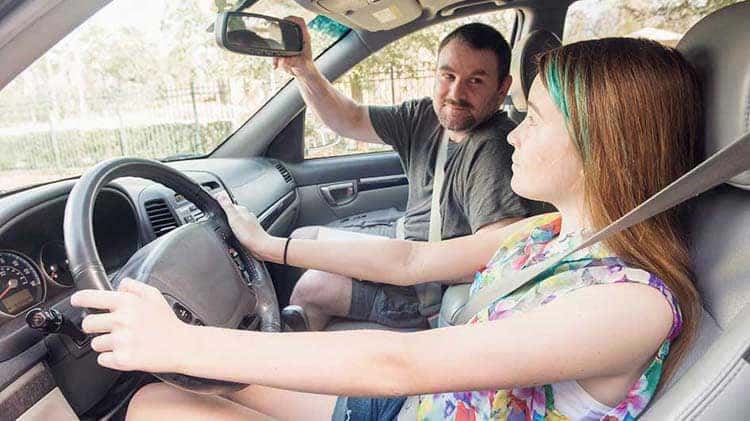
Driver education continues to evolve with new technologies such as simulators, virtual reality, and adaptive learning systems. These tools enhance training, but they do not replace experience.
Just as early driving instruction grew in response to changing roads and vehicles, future programs will adapt to electric vehicles, driver‑assistance systems, and new traffic environments.
Why It Still Matters at Mills Automotive Group
Every generation has had to learn how to drive in a world that looked different from the one before it.
From trial‑and‑error beginnings to structured education, the history of driver instruction reflects a growing understanding that driving is both a skill and a responsibility.
At Mills Auto Group, being Trusted for Generations means recognizing that safe vehicles and safe drivers depend on the same thing: preparation. Whether learning began in a classroom, online, or from the passenger seat, teaching the next driver well is one of the most important investments we make in the road ahead.
Closing Scene…
…Bentley looks thoughtful. “Driving seems kind of scary.”
“It is,” Grandpa says gently. “That’s why we teach it carefully.”
To be Continued…
 Art of Driving Dublin School of Motoring. “The History and Evolution of Driver Education.” Art of Driving School Dublin, 4 Dec. 2024, www.artofdriving.ie/the-history-and-evolution-of-driver-education/. Accessed 14 Apr. 2026.
Barnes, Margaret. “Wheels in Motion: The Evolution of Driving Lessons.” Chronology, 19 Dec. 2023, allchronology.com/2023/12/19/wheels-in-motion-the-evolution-of-driving-lessons/#google_vignette. Accessed 14 Apr. 2026.
Conley, Courtney. “From Classroom to Highway: The Evolution of Driver’s Education.” Safe2drive.com, Safe2Drive, 12 Mar. 2024, www.safe2drive.com/blog/The-Evolution-of-Drivers-Education.
Mack, Keith. “Drivers Education: A Historical Look at Mandatory Learning | LawShun.” Lawshun.com, 2 Jan. 2025, lawshun.com/article/when-did-it-become-a-law-to-take-drivers-education. Accessed 14 Apr. 2026.
State Farm. “Teen Driving 101: A Step-By-Step Test of Essential Driving Skills – State Farm®.” State Farm, 22 May 2023, www.statefarm.com/simple-insights/auto-and-vehicles/teen-driving-101-a-stepbystep-test-of-essential-skills.









0 comment(s) so far on It’s Worth the Drive – S2E5: Trust at 30 Miles-Per-Hour