


It’s Worth the Drive – S2E3: Once Upon a Highway…
Episode 3 – Once Upon a Highway…
The Story Continues…
The ramp stretches upward, the lanes multiplying.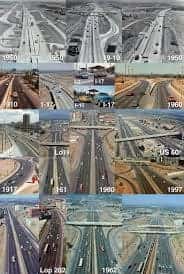
Bentley watches exit numbers flick by. “Why are they numbered like that?” she asks.
Grandpa talks about distance instead of order, about how highways were built to link places that felt far apart, about families seeing each other more often because the road made it possible…
Evolution of the Highway
The highways we know today did not appear all at once. They developed gradually as America’s needs changed—from local travel by horse and wagon, to regional trade, and eventually to long‑distance automobile travel. Each stage of highway development was built on what came before, responding to new forms of transportation, growing populations, and changing expectations for mobility.
From Trails to Thoroughfares
The earliest highways in the United States began as horse-and-wagon trails that connected towns, farms, and trading centers. These routes were informal and usually unpaved, following natural terrain, railroad rights‑of‑way, or paths already worn into the landscape.
In 1884, Thomas Stevens demonstrated the potential for long‑distance travel when he rode a high‑wheel bicycle from San Francisco, California, to Boston, Massachusetts, completing the trip in 105 days. His journey highlighted both the growing interest in cross‑country travel and the poor condition of existing routes.
In 1903, Horatio Nelson Jackson became the first documented person to drive an automobile from San Francisco to New York City, relying on dirt roads, wagon trails, railroad beds, and local roads. The trip was followed closely by the press, and film footage of portions of the journey still exists today. These early efforts showed that national travel was possible—but difficult—and underscored the need for better highways.
Paying for the Path
As travel increased, many early highways were built and maintained by private toll companies. During the 1800s and into the early 1900s, it was common for individuals or groups to form a company, construct a road—usually dirt—and charge travelers a toll for its use.
The first major American turnpike was the Philadelphia and Lancaster Turnpike in Pennsylvania, which featured a crushed‑stone surface rather than dirt. While this was an early engineering improvement, most toll roads elsewhere remained unimproved local routes.
In Lake County, Northern California, every road entering the county was privately owned prior to the early 1890s. Between the 1890s and the 1920s, all of these toll roads were either abandoned or taken over by the county or by the state of California as public highway systems expanded.
Two Wheels Lead the Way
Although highways are closely associated with automobiles, one of the strongest early forces behind road improvement came from bicyclists.
Bicycles gained popularity in the 1880s with the introduction of the high‑wheel bicycle, followed by the safer two‑wheel bicycle in the 1890s. At that time, most roads—even in cities—were dirt, rutted, and poorly suited for bicycle travel.
This led to the formation of the League of American Wheelmen (LAW), an organization dedicated to improving roads for all users, including farmers, workers, and urban residents. LAW successfully lobbied state legislatures, particularly in the eastern United States, to invest in road construction and maintenance.
These efforts helped lead to the Federal Aid Road Act of 1916, which marked the first time Congress provided federal funding to states specifically for road building.
America Starts Naming Its Routes
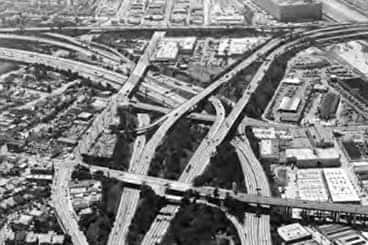
Before 1912, most highways were known only by the towns they connected. This changed with the idea of creating named automobile routes that would guide travelers across long distances.
The most significant of these was the Lincoln Highway, conceived in 1912 by Indiana entrepreneur Carl G. Fisher and formally dedicated on October 31, 1913. The Lincoln Highway became one of the first transcontinental automobile highways, originally stretching 3,389 miles through 13 states from New York City to San Francisco.
Improvements and realignments shortened the route to 3,142 miles by 1924. After the establishment of the U.S. Numbered Highway System in 1926, much of the Lincoln Highway became U.S. Route 30, with western portions designated as U.S. Routes 40 and 50. Later, much of the alignment was bypassed by Interstate 80, though many original sections remain accessible today.
Following the Lincoln Highway, many other named highways appeared, including the Yellowstone Trail, River Road, and Ukiah‑Tahoe Highway.
When Wood Was the Only Way Through
Some terrain required unusual solutions. One of the most notable examples was the Plank Road across the Algodones Dunes in Southern California.
Originally proposed in 1912, the route connected San Diego, California, to Phoenix, Arizona, across shifting sand dunes where conventional roads could not be built. In 1915, highway builder Ed Fletcher proposed using wooden planks to support vehicle traffic.
Construction began in February 1915, and a 6.5‑mile plank road using two parallel timbers opened in April of that year. The road was later widened using prefabricated wooden sections, but maintenance proved difficult.
By 1926, a paved highway replaced the plank road. The route later became U.S. Highway 80 and is now known as Interstate 8. Today, a reconstructed section of the original plank road can be seen south of Interstate 8.
Giving the Roads Numbers
In 1926, the U.S. Numbered Highway System was introduced to replace confusing named routes with a standardized national grid.
Under this system:
- Even‑numbered routes generally run east–west
- Odd‑numbered routes generally run north–south
This numbering system greatly improved navigation and established consistent highway designations across state lines.
Tolls, Bridges, and the New Scale of Travel
Modern toll facilities began appearing in the 1930s and 1940s, designed to handle sustained automobile traffic. The Pennsylvania Turnpike, opened in 1940, is widely considered the first modern superhighway.
Major toll bridges like the Golden Gate Bridge, which opened in 1937, became important links in regional highway networks. Today, toll roads remain common, particularly in the eastern United States, with most using electronic toll collection systems.
Bypassing Main Street

The opening of the Arroyo Seco Freeway in 1940 introduced the concept of controlled‑access highways. These early freeways eliminated intersections and bypassed populated areas, allowing uninterrupted travel.
This marked a significant shift in highway philosophy. Previously, highways often served as a town’s main street. Freeways, however, prioritized speed and efficiency over direct access to local businesses.
By the early 1950s, freeways were being constructed not only around cities but also between towns, setting the stage for a national system.
A Highway System Like No Other
The Interstate Highway System, authorized by the Federal‑Aid Highway Act of 1956, grew from decades of planning and experience—including the 1919 First Transcontinental Motor Convoy, observed by Dwight D. Eisenhower.
Construction began in 1956, and by 1961, more than 10,000 miles were open to traffic. While the system was declared complete in 1992, new connectors and expansions continue today. The Interstate system now extends 46,876 miles and connects all 50 states.
Why It Still Matters at Mills Automotive Group
Highways are more than routes between cities—they reflect decades of decisions about mobility, commerce, access, and speed. Every phase of highway development, from wagon trails to interstates, shaped how people travel, where communities grew, and how goods move across the country.
Understanding this history helps explain why highways function the way they do today, why some towns flourished while others were bypassed, and why maintaining and adapting these routes remains critical.
At Mills, being Trusted for Generations means appreciating that the vehicles we drive and the highways we travel are part of the same story—one built over time through innovation, necessity, and change.
Closing Scene…
…they cruise smoothly now, speed steady.
Bentley looks out at cars moving in both directions. “It’s like everyone agreed to share one really big road.”
Grandpa nods. “And it changed everything.”
To be Continued…
 Hardy, James. “Who Invented Highways? First Highways and Their Lasting Legacy | History Cooperative.” History Cooperative, 21 Nov. 2023, historycooperative.org/who-invented-highways/.
Historic US Highways. “History of US Highways.” Historic US Highways, 2018, www.historicushighways.com/history-of-us-highways.









0 comment(s) so far on It’s Worth the Drive – S2E3: Once Upon a Highway…