


It’s Worth the Drive – S2E10: Safety on Four-Wheels
Episode 10 — Safety on Four-Wheels
The Story Continues…
The engine turns off.
Bentley looks at the dark dashboard. “So when cars could tell what was happening,” she says, “people figured out how to make them safer.”
Grandpa nods. “That’s when testing began.”
He tells her about crashing cars on purpose, measuring what failed, so people wouldn’t have to.
Bentley listens quietly.
“So safety stopped being a guess.”
“Exactly,” Grandpa says….
Before Safety Had a Score
Vehicle safety has been a concern since the earliest days of the automobile. The world’s first recorded automobile accident involving a fatal injury occurred in Britain in 1889, well before cars were common or regulations existed.
In the early decades of motoring, safety development was informal and unstandardized. Manufacturers tested vehicles internally and introduced features such as disc brakes, headrests, and seat belts, but there was no independent way to compare vehicles or communicate safety performance to the public.
As cars became faster, roads busier, and ownership more widespread, the need for consistent and transparent safety evaluation became unavoidable.
Why Safety Ratings Were Created
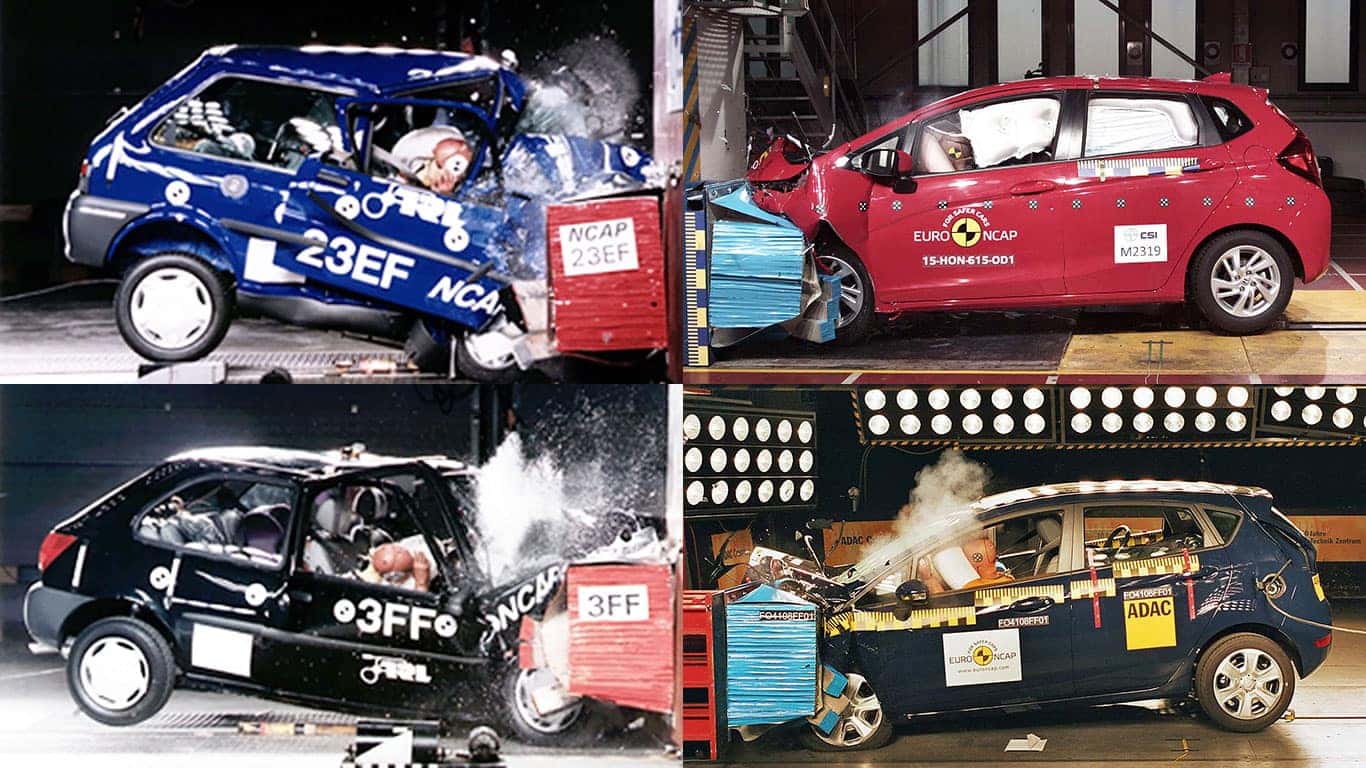
By the mid‑20th century, traffic fatalities and injuries had become a public health concern. Advocacy groups, researchers, and governments recognized that minimum safety regulations alone were not enough—drivers needed clear, comparative information.
The idea behind car safety ratings was simple:
measure how well a vehicle protects its occupants and share those results publicly.
This concept laid the foundation for modern crash testing and safety scoring systems.
The Birth of Modern Crash Testing
The 1970s marked a turning point. Advances in engineering and data collection enabled repeatable, scientific crash tests.
Introduction of Standardized Crash Protocols
Crash testing began using:
- standardized vehicle speeds
- rigid and deformable barriers
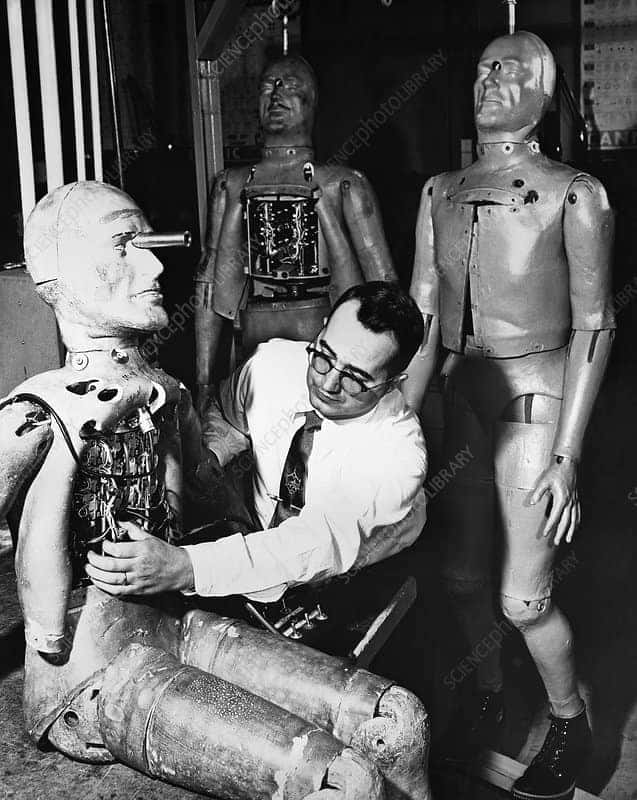
- crash test dummies equipped with sensors
- measurable injury criteria
These protocols allowed vehicles to be compared objectively—a major breakthrough in automotive safety.
Independent Safety Agencies Step In
The credibility of safety ratings depended on independence. Two key U.S. organizations emerged to fill that role.
National Highway Traffic Safety Administration (NHTSA)
Founded in 1970, NHTSA’s mission is to “save lives, prevent injuries, and reduce traffic‑related crashes.”
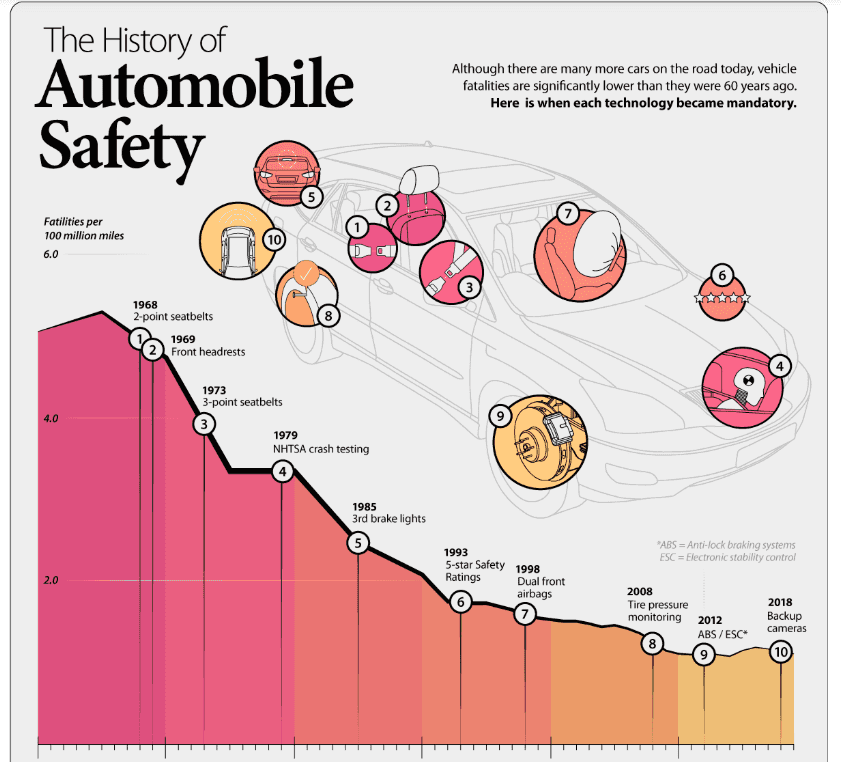
In 1979, NHTSA launched its 5‑Star Safety Ratings Program, evaluating vehicles based on:
- frontal crash protection
- side crash protection
- rollover resistance
Results are presented in a simple one‑to‑five‑star system, making safety data accessible to consumers.
Insurance Institute for Highway Safety (IIHS)
Established by the insurance industry, IIHS evaluates:
- crashworthiness
- crash avoidance technology
- headlights and roof strength
IIHS introduced the well‑known “Good / Acceptable / Marginal / Poor” scale and awards Top Safety Pick and Top Safety Pick+ designations.
Together, NHTSA and IIHS transformed safety from a behind‑the‑scenes engineering concern into a public decision‑making tool.
How Vehicles Are Tested
Modern safety ratings rely on multiple crash scenarios designed to reflect real‑world accidents.
Common tests include:
- Frontal impact (full and offset)
- Side impact (vehicle‑to‑vehicle and pole tests)
- Rollover resistance
- Roof strength
- Pedestrian protection (in some programs)
Crash test dummies simulate human anatomy and measure forces on the head, chest, legs, and spine. This data forms the basis of each vehicle’s score.
From Surviving Crashes to Preventing Them
Early safety ratings focused on crash survival. Over time, the emphasis expanded.
Active Safety and ADAS
Modern ratings now include technologies designed to avoid crashes altogether, such as:
- automatic emergency braking
- lane‑keeping assistance
- blind‑spot monitoring
- adaptive cruise control
This shift reflects a major philosophical change:
The safest crash is the one that never happens.
Lessons Learned the Hard Way
Several high‑profile incidents reshaped safety testing and regulation:
- Ford Pinto (1970s): prompted stricter fuel system integrity standards
- Chevrolet Corvair (1960s): underscored the importance of handling and stability
- Real‑world fatal crashes: accelerated seat belt laws, airbag adoption, and improved testing
Each tragedy exposed shortcomings and drove improvements in how safety was tested and rated.
Global Safety Ratings
Safety ratings are now a worldwide effort.
- Euro NCAP (Europe) introduced rigorous crash testing in the 1990s
- Emerging markets such as India and Brazil now use safety ratings to raise public awareness
- Programs increasingly share data and align standards globally
As vehicles are sold internationally, safety expectations have become more universal.
Why Safety Ratings Matter to Buyers
Safety ratings influence:
- purchasing decisions
- brand reputation
- resale value
- manufacturer design priorities
Consumers increasingly expect safety transparency. High ratings build trust, while poor ratings can damage a model’s success.
In many cases, safety ratings now compete with fuel economy and technology features as top buying criteria.
The Future of Safety Ratings
As vehicles evolve, safety evaluation will continue shifting.
Future ratings will increasingly address:
- advanced driver assistance performance
- autonomous system reliability
- cybersecurity risks
- electric vehicle battery safety
- vehicle‑to‑vehicle communication
Crash testing will blend physical tests with advanced simulation, reflecting the growing role of software in vehicle behavior.
Why It Still Matters at Mills Auto Group
Car safety ratings give drivers a clear, trusted way to understand how vehicles perform when it matters most.
At Mills Auto Group, being Trusted for Generations means helping customers make informed choices—not just about style or performance, but about protection. Understanding how safety ratings are developed allows buyers to see beyond marketing claims and evaluate vehicles based on real‑world data and proven standards.
As safety technology continues to advance, these ratings remain a critical bridge between engineering and everyday driving—supporting safer roads for today’s families and the generations that follow.

Closing Scene…
…they pull fully into the garage.
Bentley unbuckles slowly. “I think I get the rules now.”
Grandpa smiles as the lights go out. “You were always meant to.”
They step out together.
The road has taught what it could.
Next, it’s time to learn how the car works.
autohistoryc. “The Role of Crash Tests and Vehicle Safety Ratings after Historic Accidents – Auto History Club.” Auto History Club, 9 May 2025, autohistoryclub.com/the-role-of-crash-tests-and-vehicle-safety/. Accessed 15 Apr. 2026.
Wheels & Motion Editorial. “The Development of Car Safety Ratings: A Historical Overview – Wheels & Motion.” The Insurance Universe, 8 May 2024, wheelsandmotion.com/the-development-of-car-safety-ratings/. Accessed 15 Apr. 2026.









0 comment(s) so far on It’s Worth the Drive – S2E10: Safety on Four-Wheels