


It’s Worth the Drive – S2E1: How the Road Learned Its Rules
Episode 1 — How the Road Learned Its Rules
Opening Scene
The garage door lifts again.
The same car.
The same driveway.
But the silence is gone now.
Granddaughter Bentley’s voice fills the back seat—curious, constant, already forming opinions. She sits upright in her booster seat, eyes scanning the world beyond the glass like it’s new every time.
They stop at the corner like they always do.
Bentley leans forward against the straps of her booster seat. “Why are stop signs red?” she asks. “Why not blue?”
Grandpa glances at the sign, worn but familiar. “Because red is hard to ignore,” he says. “People needed something they’d notice every time.”
As they pull away, Bentley watches the traffic light ahead change colors, eyes following the quiet order it brings…
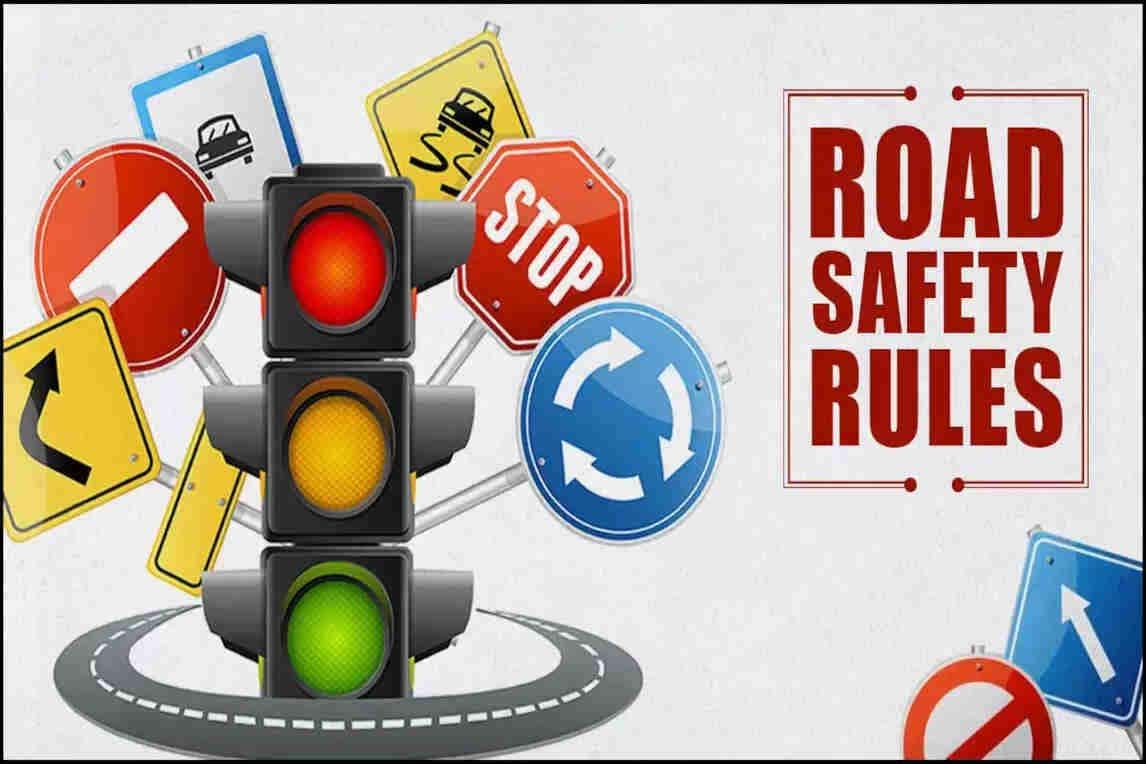
Before Rules Were Written
Long before automobiles, roads already needed order. In the ancient world, movement was slow, but not chaotic.
As early as 450 BC, the Roman Empire established some of the first known road regulations. Roman law dictated minimum road widths, restricted wheeled traffic in city centers during daylight hours, and designated certain streets as one‑way to ease crowding. Commercial carts were often required to operate at night, leaving daytime streets largely for pedestrians.
These early rules reflected a simple reality: streets were shared spaces, and regulation existed to manage coexistence rather than speed.
Custom Over Code
After the fall of Rome, formal road laws faded, but customs remained. During the medieval period, horse‑drawn wagons and pedestrians navigated by habit and local enforcement. Authorities punished “furious driving,” limited how many animals a single driver could manage, and restricted carts on narrow streets during busy hours.
This era also settled a lasting convention: right‑hand travel. In Europe and Colonial America, riders and wagon drivers kept to the right for practical reasons tied to visibility, balance, and personal safety. By 1804, New York formally required right‑hand travel, and the practice soon spread nationwide.
Rules existed—but they were local, informal, and shaped by the pace of life.
Speed Changes Everything
The late 19th century introduced something roads had never dealt with before: fast, heavy, self‑propelled vehicles.
Early automobiles moved faster than horses, required more stopping distance, and demanded predictable behavior from others. Public reaction was mixed. While some embraced innovation, others viewed cars as disruptive and dangerous intrusions into shared space.
Governments responded cautiously. Britain’s 1865 Red Flag Act required a person to walk ahead of motor vehicles waving a warning flag. Speed limits were set at a walking pace. These restrictions slowed automotive development for decades.
The United States took a different path.
America Writes Its First Traffic Laws
In 1901, Connecticut passed the first U.S. speed limits for automobiles. New York soon followed with the first comprehensive motor vehicle law, requiring registration and visible identification.
In 1903, New York City adopted the nation’s first formal traffic code—Rules for Driving and the Regulation of Street Traffic. These rules emphasized predictability and vehicle movement, asserting that roadways were primarily intended for vehicles and directing pedestrians to cross at designated points.
This marked a cultural shift: streets were no longer managed primarily for coexistence, but for traffic flow.
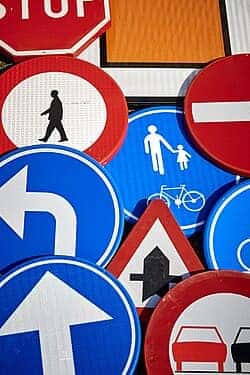
Engineering the Street
By the 1920s, traffic congestion was framed as an engineering problem. Cities hired traffic engineers who approached roads like water or sewer systems—focused on volume, efficiency, and uninterrupted flow.
This period introduced one‑way streets, medians, standardized intersections, and coordinated signals. Engineers organized professionally, and their recommendations spread quickly.
Streets became systems to optimize, not spaces to negotiate.
Signs Begin to Speak
As traffic increased, communication became essential.
The first electric traffic signal appeared in Cleveland in 1914, using red and green lights to control intersections. Drivers quickly learned to respond to color rather than instruction.
Meanwhile, early road signs—often installed by automobile clubs—were inconsistent and confusing. Different shapes, colors, and messages appeared along the same routes.
Uniformity became necessary.
Standardization Takes Hold
Between 1923 and 1935, states and national organizations collaborated to standardize traffic control devices. The effort culminated in the first Manual on Uniform Traffic Control Devices (MUTCD) in 1935.
 This manual established:
- Standard sign shapes
- Consistent color meanings
- Clear categories for regulatory, warning, and guide signs
The system was designed for instant recognition, reducing confusion and improving decision‑making.
Safety Becomes Federal Policy
Until the mid‑20th century, traffic safety was largely local. That changed in 1966 with two landmark laws.
The National Traffic and Motor Vehicle Safety Act established federal vehicle safety standards. The Highway Safety Act required states to adopt federally approved safety programs or risk losing highway funding.
This created a national baseline for road safety, enforcement, and driver behavior.
Adapting Rules to Behavior
In the decades that followed, traffic laws increasingly targeted specific behaviors:
- Seat belt use became mandatory in many states beginning in the 1980s
- Impaired‑driving standards were unified through federal incentives
- Distracted‑driving laws emerged in response to mobile technology
Rules evolved alongside vehicles and culture.
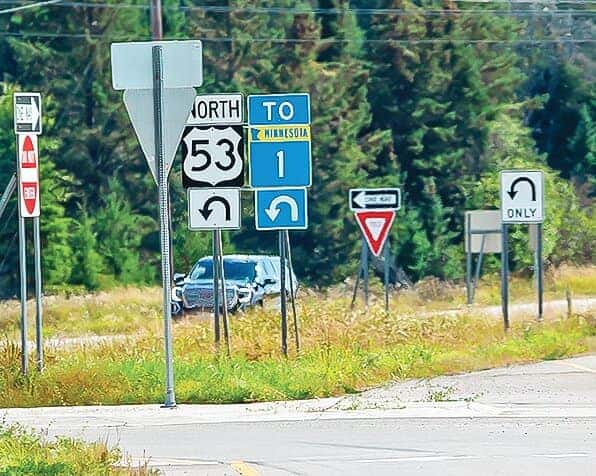
The Language of Color and Shape
Modern traffic signs rely on deeply learned visual cues:
- Red for immediate action
- Yellow for caution
- Green for guidance
- White and black for regulation
These conventions were refined over decades through MUTCD revisions, improved materials, and visibility standards. Their success lies in familiarity—drivers understand them without conscious effort.
Why It Still Matters at Mills Automotive Group
Traffic rules, signs, and signals shape how vehicles interact with people and places. They guide behavior, reduce uncertainty, and support the safety systems built into modern vehicles.
Understanding their history reveals why consistency, clarity, and thoughtful design still matter.
At Mills, being Trusted for Generations means respecting not just the vehicle, but the environment it operates in—where rules, signs, and shared expectations quietly support every trip.
The road didn’t always look this way. It learned—step by step—how to guide us forward.
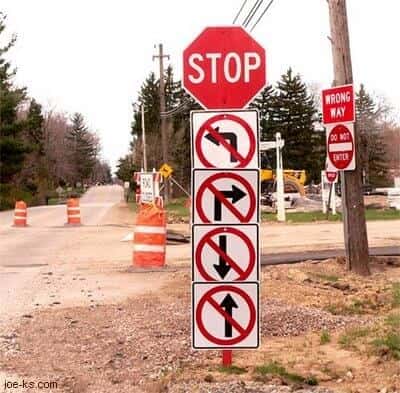
Closing Scene…
…they stop again later—another intersection, another red sign.
Bentley nods to herself. “So the rules are kind of like promises,” she says. “Everyone agreeing to do the same thing.”
Grandpa’s smile deepens. “That’s exactly what they are.”
The car moves on, guided less by signs than by trust.
To be Continued…
Fiske, Colin. “The Rules of the Road. How Did We Get Here? | NEC.” Yournec.org, 22 Aug. 2022, www.yournec.org/the-rules-of-the-road-how-did-we-get-here/.
LegalClarity Team. “A History of When Traffic Laws Began.” LegalClarity, 5 Aug. 2025, legalclarity.org/a-history-of-when-traffic-laws-began/.
Road Traffic Signs. “A History of Color in Road Signs and Traffic Lights.” Www.roadtrafficsigns.com, 2026, www.roadtrafficsigns.com/traffic-sign-colors.









0 comment(s) so far on It’s Worth the Drive – S2E1: How the Road Learned Its Rules