


It’s Worth the Drive – S1E9: A Grip That Holds the Road
Episode 9 — A Grip That Holds the Road
The Story Continues…
A moment of slip — gravel under the tires.
Before he can react, the car corrects itself. A subtle adjustment. Almost imperceptible.
He keeps driving…
Where Power Meets the Road
Every vehicle delivers power to the ground—but power alone does not equal control. From the earliest automobiles, drivers learned that acceleration could just as easily undermine stability as improve motion. Wet roads, loose gravel, ice, snow, or uneven terrain all posed the same problem: wheels could spin faster than the surface beneath them could support.
Traction control exists to solve that problem. Not by limiting performance, but by managing it—quietly holding the line between grip and slip.
Before Electronics Knew What Slip Was
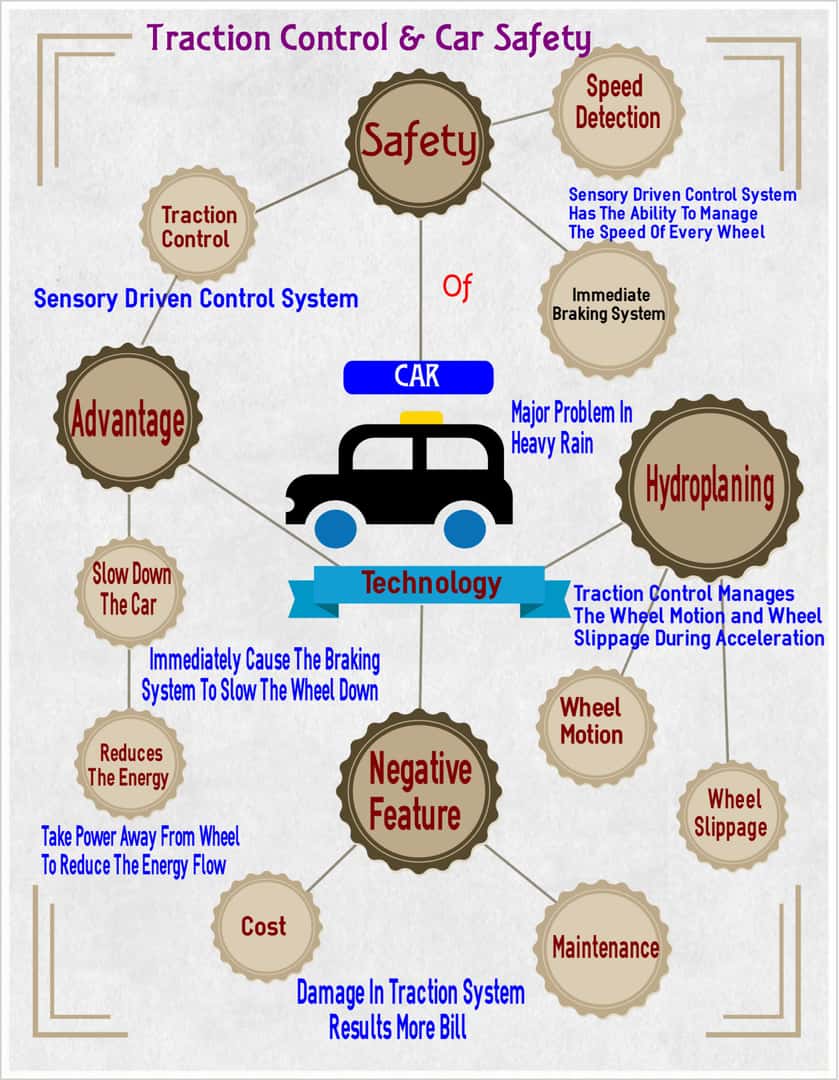
The earliest attempts to control traction came long before computers entered the equation. Engineers understood that when one wheel lost grip, sending all power to it was pointless. The solution was mechanical.
The limited-slip differential was among the first breakthroughs. By redistributing torque between wheels, it ensured that power could still reach the wheel with traction when another slipped. This innovation dramatically improved mobility in low‑traction conditions and laid the groundwork for future control systems.
Yet mechanical systems had limits. They could only react after the slip occurred. They relied on resistance and friction rather than prediction. As vehicles grew more powerful—and drivers demanded better control—those limitations became obvious.
The Electronic Turning Point
The real transformation began in the 1970s, when automotive engineers began experimenting with electronic solutions. Advances in sensors and computing allowed vehicles to measure wheel speed with precision and react faster than any mechanical system ever could.
The earliest electronic traction control systems were basic, but revolutionary. They monitored wheel rotation and intervened when one wheel spun faster than the others—either by reducing engine output or applying braking force to the slipping wheel.
For the first time, vehicles could actively manage traction rather than simply endure its loss.
Thinking Faster Than the Driver
By the 1990s, traction control systems had evolved rapidly. Microprocessors grew faster. Sensor networks expanded. Software algorithms became more refined. The result was a system capable of making split‑second decisions—often before a driver even realized traction was compromised.
Electronic traction control no longer waited for a dramatic wheel spin. It detected the earliest signs of grip loss and intervened smoothly, maintaining stability without harsh corrections.
This era marked an important shift: traction control became preventative rather than corrective.
When Braking and Traction Spoke the Same Language
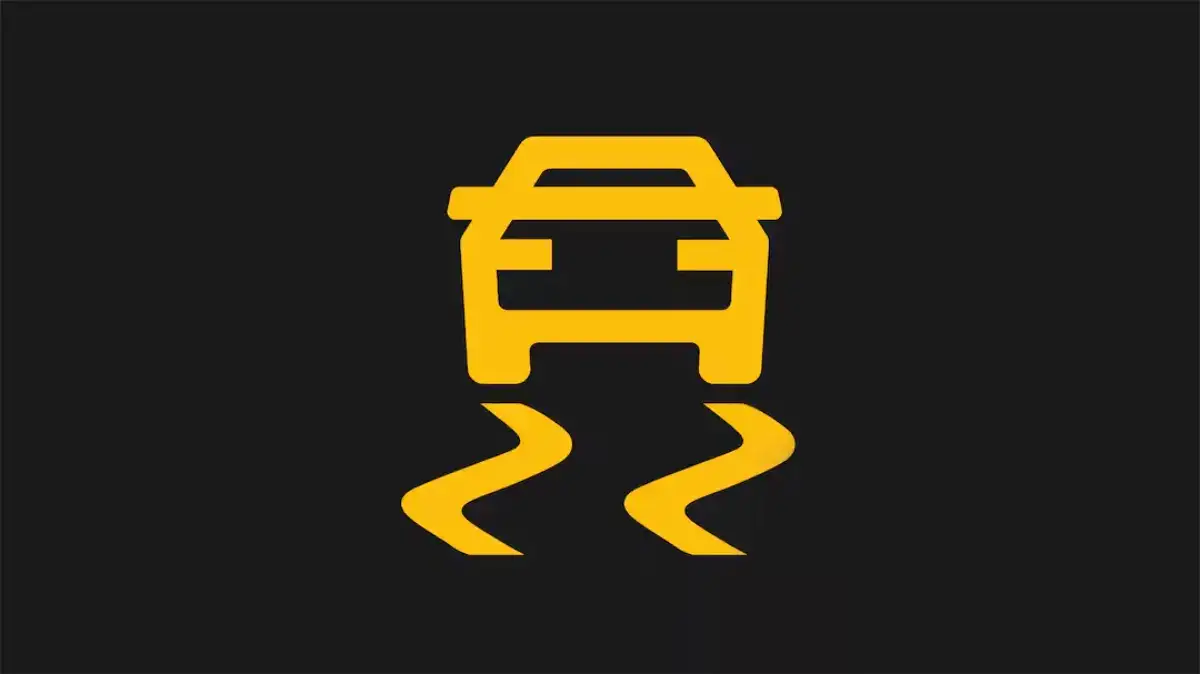
A major leap occurred when traction control was integrated with Anti‑Lock Braking Systems (ABS). ABS already prevented wheels from locking during braking. By sharing sensor data, traction control extended that logic to acceleration.
Together, the systems managed grip in both directions—power delivery and deceleration. If a vehicle slipped under the throttle, the traction control reduced torque. If it slipped under braking, the ABS modulated pressure. Both systems worked from the same data, responding instantly and precisely.
This integration created a unified stability foundation that modern vehicles still rely on today.
From Reaction to Prediction
As sensor technology advanced, traction control systems gained new awareness. Modern vehicles now employ wheel‑speed sensors, accelerometers, yaw sensors, steering angle sensors, and gyroscopes, all feeding information into powerful Electronic Control Units (ECUs).
With this data, traction control systems began to predict loss of grip rather than merely react to it. Subtle steering inputs, surface changes, and vehicle dynamics could be processed in real time, allowing the system to anticipate instability before it escalated.
This predictive ability placed traction control at the heart of modern vehicle safety architecture.
A Partner to Stability
Traction control is no longer a stand‑alone system. In modern vehicles, it operates as part of a larger network that includes Electronic Stability Control (ESC), torque vectoring, adaptive suspensions, and automated braking systems.
Together, these systems manage how a vehicle accelerates, turns, and recovers from unexpected changes in traction. On wet pavement, icy intersections, gravel roads, or steep inclines, traction control works continuously—often unnoticed—to keep the vehicle obedient to driver input.
What once required expert driving skill is now supported by silent assistance.
Why It Still Matters at Mills Automotive Group
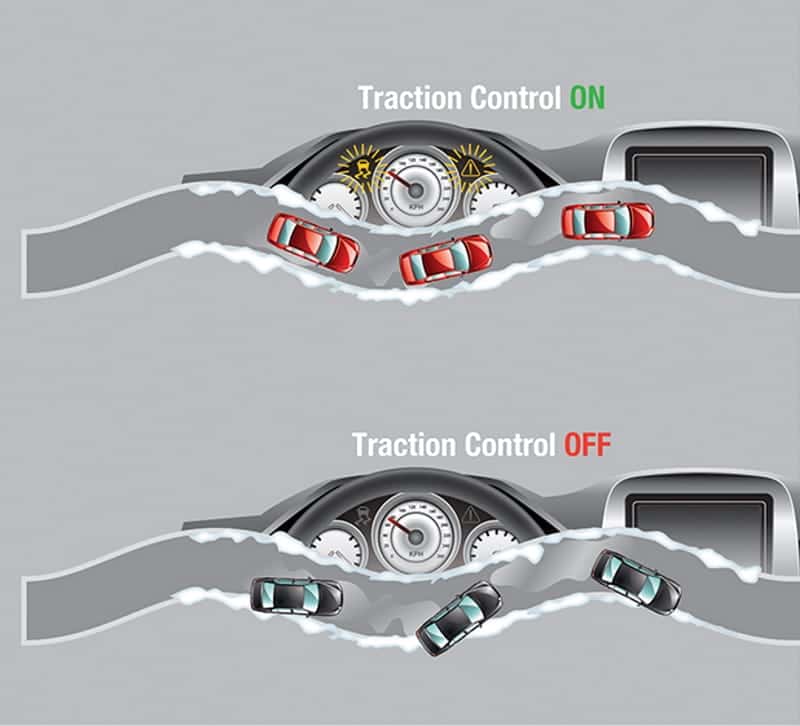 Traction control represents the evolution from raw power to controlled performance. It exists not to limit drivers, but to protect them—especially in moments when physics moves faster than reflex.
Modern traction control systems depend on precise sensing, reliable calibration, and proper integration with braking and stability systems. A fault in one part of that network can compromise the whole.
That’s why traction control still matters at Mills.
Being Trusted for Generations means recognizing that safety is not just about features—it’s about how those features work together, how they are maintained, and how well they serve drivers when conditions are less than ideal.
Traction control doesn’t announce itself. It doesn’t seek attention. But when the road pushes back, it’s often the system that quietly keeps everything in line.
Closing Scene…
…stability returns as if it never left.
Some systems step in quietly — just long enough to keep you upright.
You don’t feel helped. You just keep going.
To be continued…
 Holm, Tobias. “A Brief History of Traction Control – Techhistorian.” Techhistorian, 24 Aug. 2024, techhistorian.com/history-of-traction-control/#summary. Accessed 9 Apr. 2026.









0 comment(s) so far on It’s Worth the Drive – S1E9: A Grip That Holds the Road