


It’s Worth the Drive – S1E8: The Roll That Rocked the World
Episode 8 — The Roll That Rocked the World
The Story Continues…
He notices the road more than usual today.
Dry pavement. Tar strips. A stretch of gravel near the shoulder. Four points of contact holding everything together.
The tires roll on without complaint…
Before Wheels Were Wheels
Long before anything rolled across the ground, humans were already living with rotation.
Nature favored roundness. The sun, the moon, animal eyes, fruits, ripples in water—circular forms surrounded early humans and felt instinctively safe and familiar. Even human shelters echoed this preference, with round huts appearing tens of thousands of years ago. Sharp shapes meant danger: teeth, thorns, broken stone. Curves meant continuity.
As early as 400,000 BC, humans were harnessing rotational motion to create fire by striking flint in controlled cycles. By 150,000 BC, rotating vertical drills were used to bore holes in beads and pendants. Tools like the bow drill refined this technique, converting motion into precision.
At least 20,000 years ago, humans swung diamond-shaped bone objects called bullroarers, producing sound through rotational motion. Some of the earliest musical instruments ever discovered, they remain in use today in parts of Australia and Papua New Guinea.
Long before wheels moved objects, rotation was already shaping culture.
When Rolling Beat Lifting
By 12,000 BC, humans discovered something simple but transformative: rolling heavy objects was easier than dragging them.
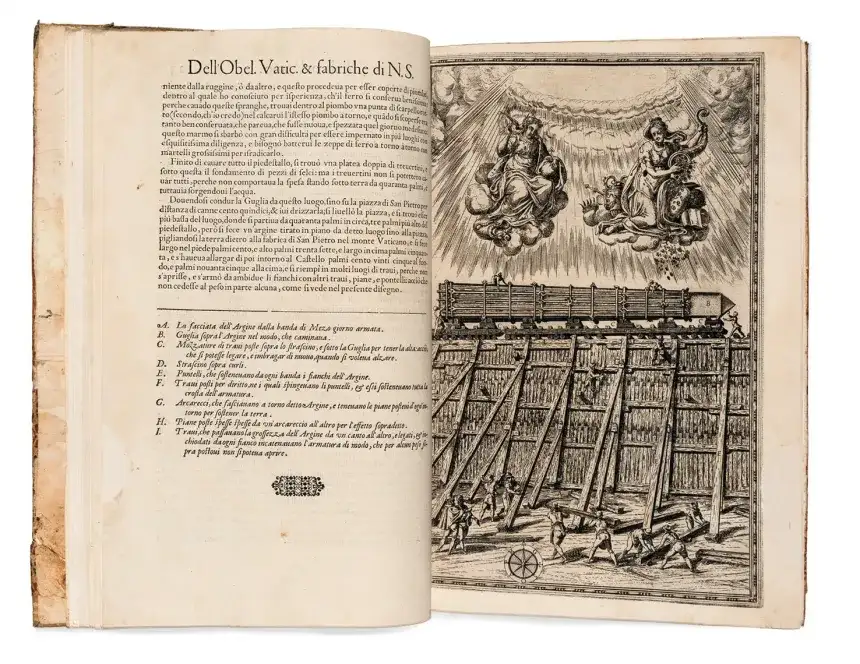
Neolithic people began using log rollers to move massive stones, particularly for megalithic construction such as dolmens. Loads were placed atop wooden sledges, with logs laid beneath to reduce friction. As one log rolled free, it was carried to the front and reused.
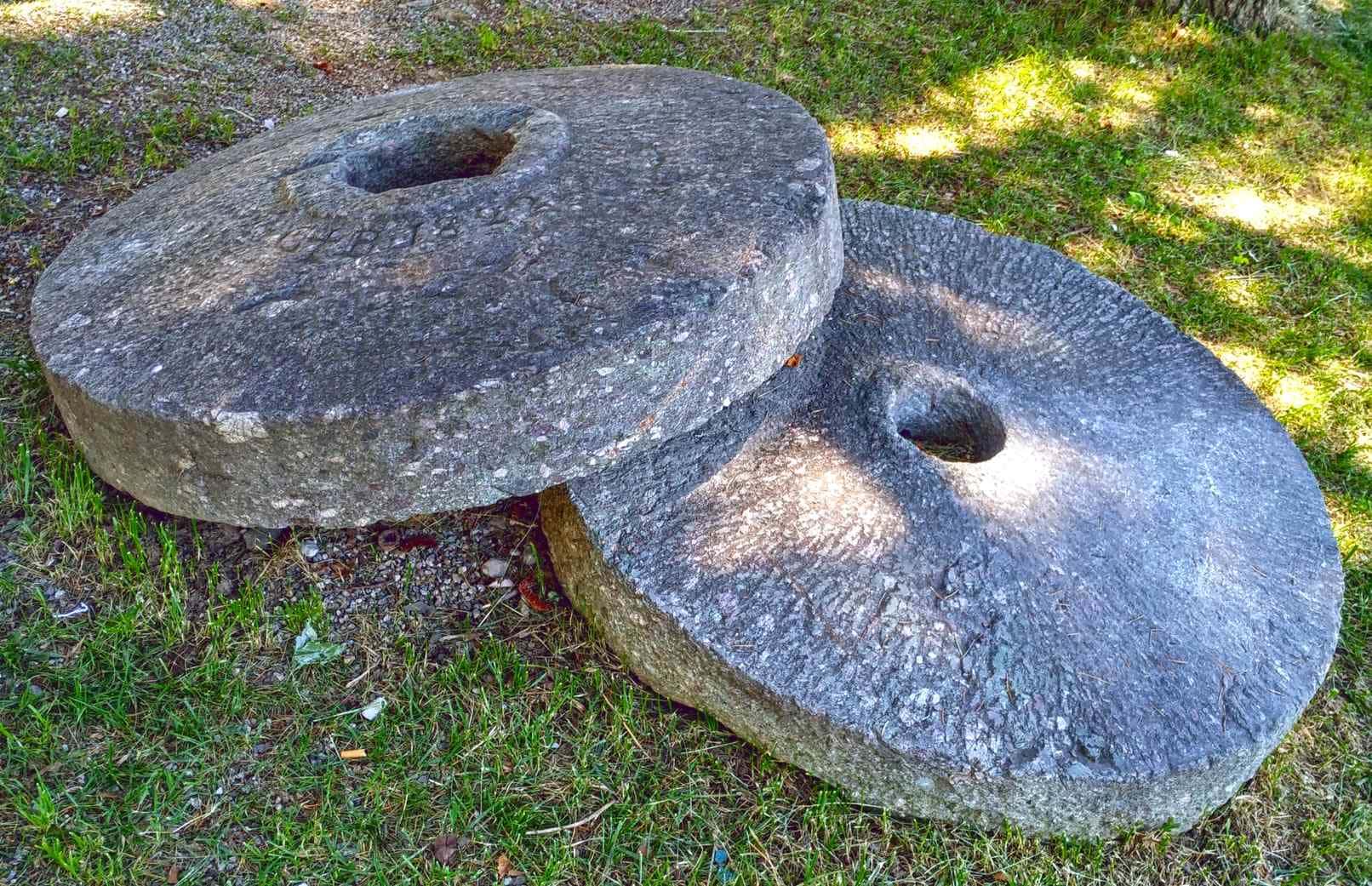
It was effective—but imperfect. Logs were uneven. Aligning them was difficult. Over time, grooves formed where sledges repeatedly passed, unintentionally creating early axle-like channels.
This transitional phase lasted thousands of years. From this trial and error, humans learned not just that rotation reduced effort—but that controlling rotation mattered just as much.
The Wheel Learns to Spin in Place
The first true wheel was not invented for transport.
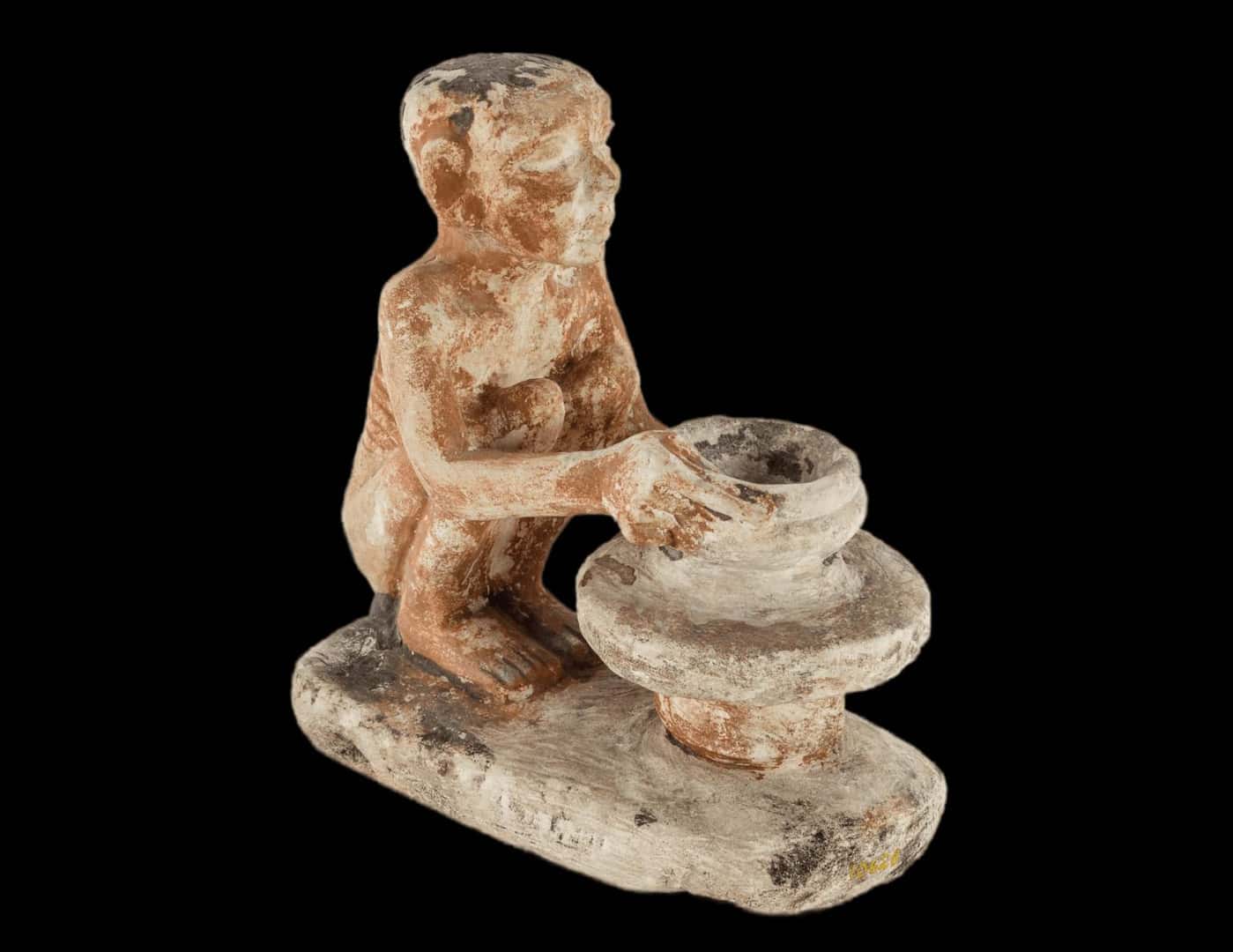
Around 5200 BC, people in the Near East developed the potter’s wheel, transforming craft production forever. Early versions—called tournette or slow wheels—were simple rotating disks spun by hand. The oldest known examples come from Iran’s Tepe Pardis settlement.
By 4200–4000 BC, the Sumerians refined this concept into the true potter’s wheel, complete with an axle. Heavy stone disks spun smoothly beneath clay, allowing craftsmen to shape vessels faster and more consistently.
This wheel-and-axle system marked a turning point: rotation had been mechanized.
From Workshop to Roadway
It was only after centuries of industrial use that the wheel moved under vehicles.
Archaeological evidence from Mesopotamia and Ukraine shows that by 4000–3500 BC, solid wooden disk wheels mounted on axles were being used for transport. Clay tablets from Uruk depict four-wheeled wagons. Miniature toy carts, wagon tracks, and artistic depictions soon appeared across Europe.
The famous Ljubljana Marshes Wheel, dating to the Copper Age, is the oldest known solid wheel. It’s simple construction—flat wooden disks fixed to an axle—was enough to revolutionize logistics, agriculture, and trade.
For the first time, heavy loads could move efficiently across land.
War, Speed, and the Rise of Spokes
Solid wheels were strong—but heavy.
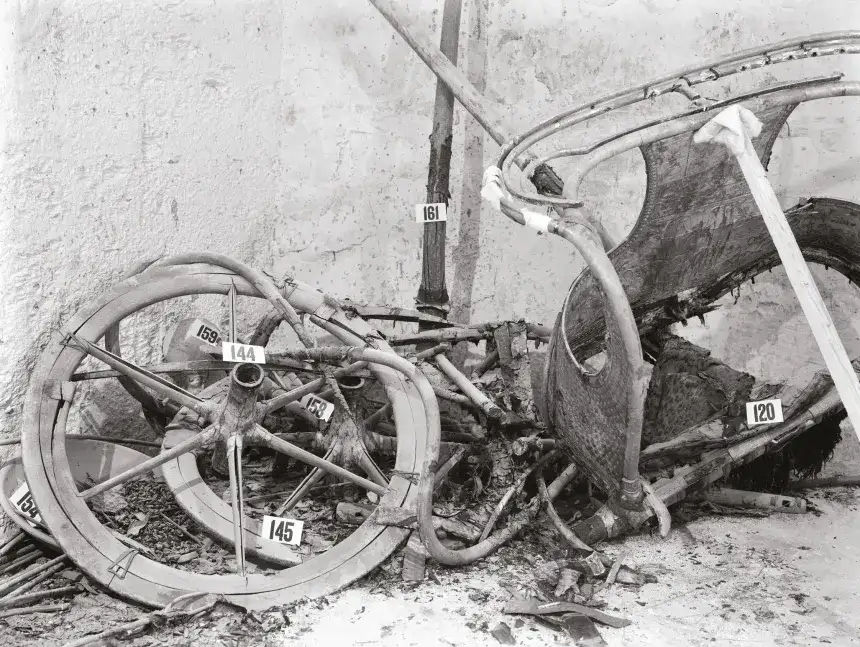
Around 3000 BC, they were adapted for warfare in the form of chariots. By 2000 BC, engineers in the Eurasian steppes developed the spoked wheel, dramatically reducing weight. This allowed lighter animals, such as horses, to pull vehicles at far greater speed.
Spoked wheels spread from Central Asia into Anatolia, Egypt, and Mesopotamia over the next several centuries. Bronze Age chariots outfitted with spoked wheels were capable of speeds unimaginable just centuries before.
With the spoke, the wheel had evolved from brute force into refined engineering.
Stronger Roads, Harder Edges
As wheeled transport spread across Eurasia, environments demanded durability.
By 750 BC, Celtic cultures had added iron rims to wooden wheels, heating metal bands and fitting them snugly as they cooled. This innovation enabled long-distance travel over rough terrain and laid groundwork for future road networks.
The Romans expanded upon these ideas, constructing paved highways designed specifically for wheeled vehicles—proof that once wheels existed, infrastructure followed.
Water soon joined the story. By 300 BC, Greek engineers were harnessing river flow with water wheels, grinding grain and lifting water using rotational power. Wheels were no longer just moving loads—they were doing work.
The Wheel Learns New Jobs
By 100 BC, China introduced the wheelbarrow, using a large central wheel to balance heavy loads. Around the same time, complex gear systems appeared in devices like the Antikythera mechanism, demonstrating the wheel’s role in calculation and prediction.
In 1035, the spinning wheel transformed textile production, converting raw fibers into thread with speed and consistency. Wheels powered looms, mills, irrigation systems, and machines long before engines entered the picture.
The wheel had become a universal translator of force.
Rubber Meets Steel
The modern age refined the wheel rather than reinventing it.
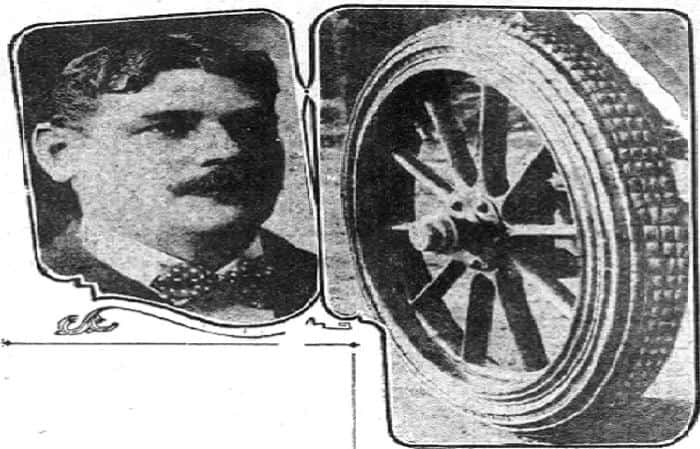
The pneumatic rubber tire, patented in 1847 and perfected by John Boyd Dunlop in 1888, transformed comfort and speed. Steel, iron, and composite railway wheels followed, including the quiet and flexible Mansell railway wheel.
By 1885, Karl Benz’s three-wheeled automobile rolled on wire-spoked wheels. Within decades, wooden artillery wheels gave way to steel, then cast, forged, and alloy designs. Magnesium, aluminum, and eventually carbon fiber reduced weight while increasing strength.
The wheel became a precision component.
When the Wheel Refused to Go Flat
Modern innovation questioned one assumption entirely: air.
Michelin’s Tweel and Uptis systems eliminated pneumatic tires altogether, replacing them with airless composite structures. Bugatti explored extreme solutions for ultra-high-speed travel with the PAX system, capable of supporting vehicles at over 300 mph.
At the frontier of exploration, Earth’s rules no longer applied.
Rolling Beyond Earth
Lunar rovers like NASA’s VIPER and Toyota’s Lunar Cruiser use all‑metal, elastic wheels designed to survive extreme cold, radiation, and fine regolith. Some wheels can lift independently or reconfigure to handle terrain no human road ever will.
From pottery studios to the Moon, the wheel never stopped adapting.
Why It Still Matters at Mills Automotive Group
The wheel is far more than a rolling surface. It is a precision component tied directly to braking, suspension, steering, efficiency, and safety. Changes in wheel design influence how a vehicle accelerates, turns, stops, and absorbs impact—on Earth or beyond.
Understanding that evolution matters.
At Mills Auto Group, wheels are not judged by appearance alone, but by how they affect the entire driving system. Whether steel, alloy, forged, or composite, every wheel carries responsibility—because it connects vehicle to road, and road to driver.
Being Trusted for Generations means respecting the history behind even the most familiar components,
and recognizing that sometimes the most powerful innovations are the ones that simply keep rolling forward.
Closing Scene…
…the drive ends without incident.
Four pieces of rubber keep the weight balanced, the direction honest, the journey possible.
Everything rests on what touches the ground.
To be continued…
 Frithowulf, Hrothsige. “History of the Wheel: Invention and Timeline.” Malevus, 4 Sept. 2022, malevus.com/how-the-wheel
-was-invented-and-developed/.
Vilnissimo. ““I Did Warn You That a Dog Would Be a Terrible Tie.”” CartoonStock, 2026, www.cartoonstock.com/directory/i/inappropriate_attire.asp. Accessed 8 Apr. 2026.
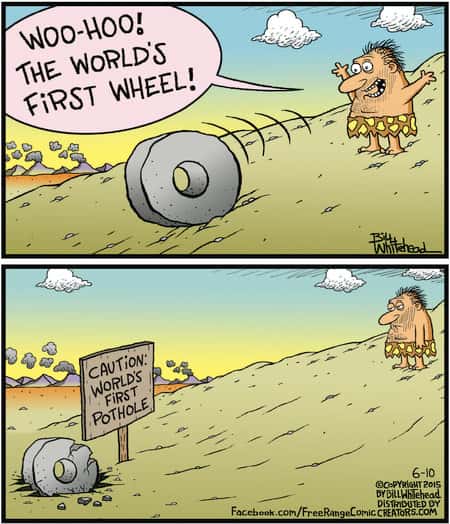
Whitehead, Bill. “Free Range – June 10, 2015.” Gocomics.com, Andrews McMeel Universal, 10 June 2015, www.gocomics.com/freerange/2015/06/10. Accessed 8 Apr. 2026.









0 comment(s) so far on It’s Worth the Drive – S1E8: The Roll That Rocked the World