


It’s Worth the Drive – S1E7: A Brake-Through Performance
Episode 7 — A Brake-Through Performance
The Story Continues…
Traffic slows suddenly.
The old man presses the brake pedal firmly, controlled. The car responds smoothly — no skid, no panic, just steady deceleration.
Time stretches for a second.
Then releases…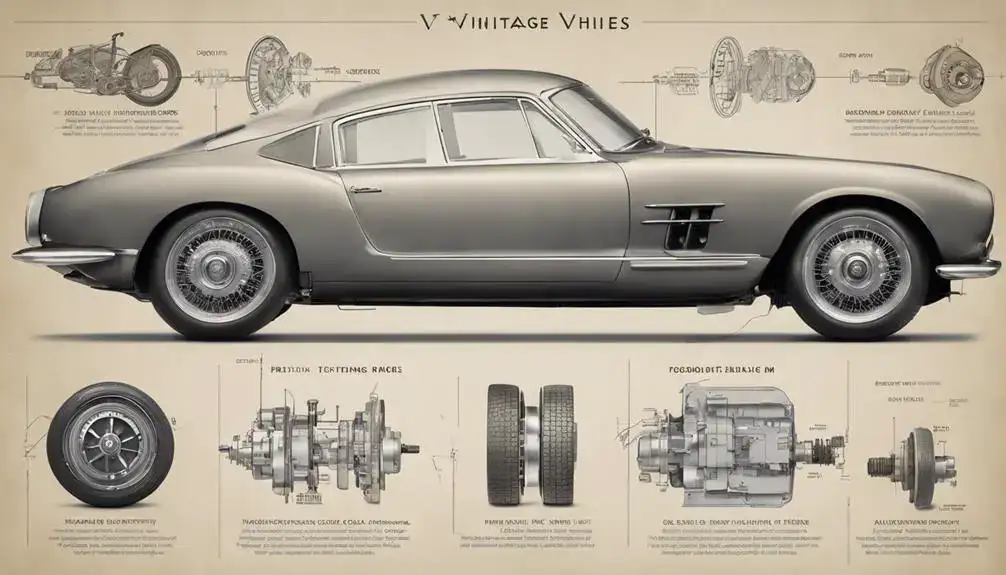
In the Space Between Motion and Stillness
Every journey depends on the same quiet miracle—the ability to stop. Long before cars were fast, comfortable, or even reliable, inventors faced a single challenge that would shape everything that followed: how to control momentum safely.
Brakes are not about speed. They are about restraint. And as vehicles grew heavier, faster, and more capable, braking systems had to evolve just as quickly to keep up.
When Stopping Meant Scraping
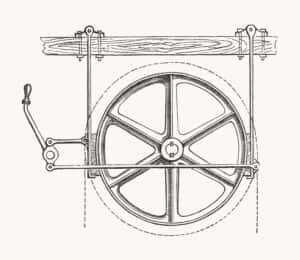
The first braking systems mirrored the technology of horse‑drawn carriages. A simple lever pressed a wooden block against the wheel rim, converting motion into friction by brute force. On steel‑rimmed wheels traveling 10 to 20 miles per hour, this was enough.
But progress arrived quickly.
When rubber tires replaced steel rims in the late 1890s, wooden block brakes became obsolete overnight. Pressing wood against rubber didn’t stop vehicles—it destroyed tires. The automobile demanded a new solution.
Containing Friction
The answer came by hiding the braking action inside the wheel itself.
In the early 1900s, inventors like Gottlieb Daimler and Wilhelm Maybach experimented with drum‑based systems, but it was Louis Renault who refined the idea into something practical. His mechanical drum brake used curved shoes pressed outward against the inside of a rotating drum, creating controlled friction.
Early external drum systems proved unreliable, especially on hills and in bad weather. Engineers responded by enclosing the mechanisms entirely—creating internal expanding drum brakes that lasted longer and worked more consistently.
For the first time, braking became predictable.
Replacing Muscle with Fluid
Mechanical brakes still relied on cables and driver strength. Uneven force, stretching lines, and constant adjustment limited effectiveness—especially as cars gained speed.
That changed in 1918 when Malcolm Loughead (later Lockheed) introduced hydraulic braking. Instead of cables, hydraulic fluid transferred force evenly to all four corners of the vehicle. Pressing the pedal activated cylinders rather than pulleys.
Hydraulic brakes reduced effort, improved balance, and made four‑wheel braking dependable. By the early 1930s, most manufacturers had adopted the system, finally giving drivers consistent stopping power.
Stopping Gets Easier
As speeds climbed, so did the need for assistance.
Vacuum‑assisted power brakes emerged in the late 1920s, using engine vacuum to amplify pedal force. Drivers no longer need the strength to stop quickly. The car did more of the work.
Systems like the Bendix Treadle‑Vac and later hydro‑assist designs softened braking effort while improving control. Stopping became smoother, faster, and safer—especially in emergencies.
Why Squeezing Beat Pushing
Drum brakes worked—but they trapped heat.
As vehicles became heavier and faster, drum brakes struggled to dissipate heat, leading to fade and unpredictable performance. Disc brakes offered a better solution.
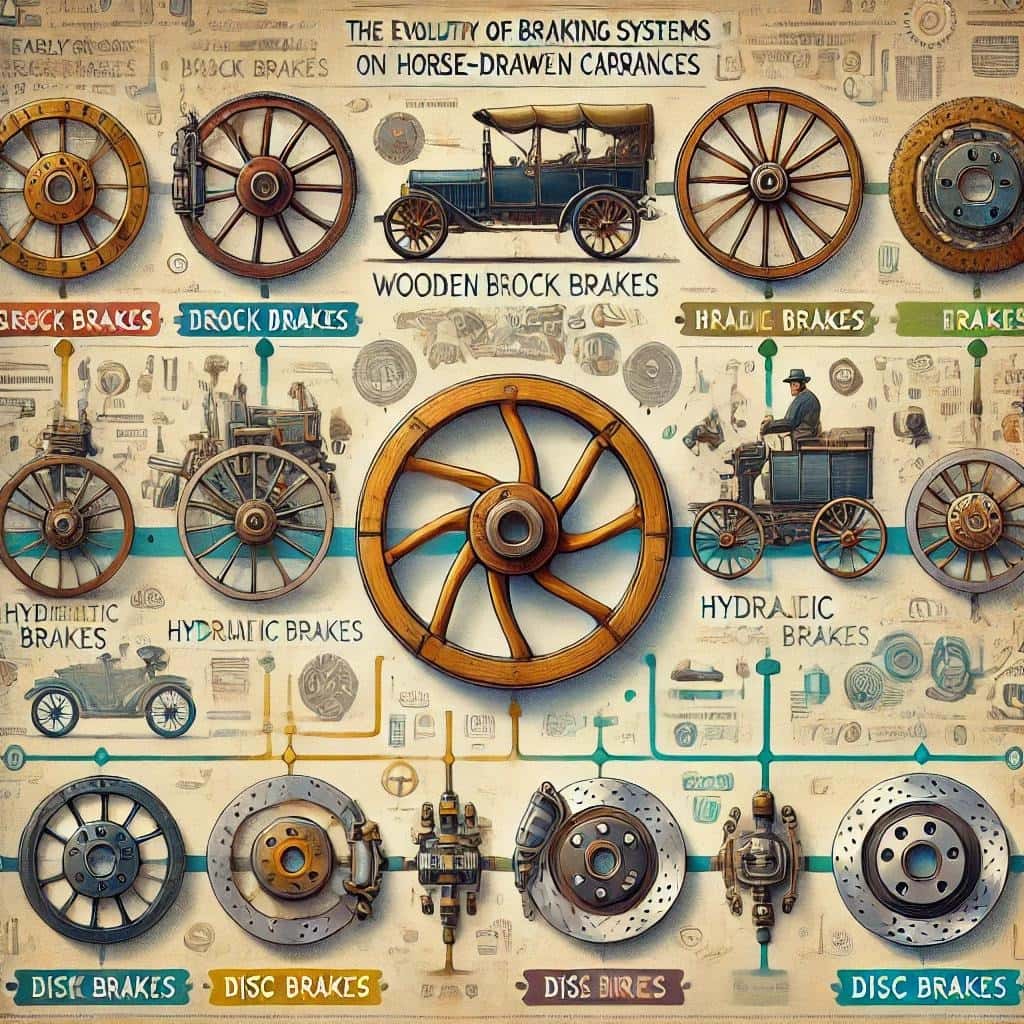
First conceived in the early 1900s and refined mid‑century, disc brakes used exposed rotors clamped by brake pads. Heat escaped quickly. Performance stayed consistent. Emergency stops improved dramatically.
By the 1960s, disc brakes spread rapidly across Europe and North America. Eventually, they became the standard—especially on front wheels, where most stopping force occurs.
When Brakes Learned to Think
Even the best brakes fail if the wheels lock up.
Anti‑lock Braking Systems (ABS) began as aviation technology in the 1920s, designed to prevent aircraft skidding on landing. By the 1970s, electronic ABS reached automobiles—thanks to work by Bosch, Mercedes‑Benz, and others.
ABS prevents wheel lock by rapidly adjusting brake pressure. The result is controlled deceleration and the ability to steer while braking hard—especially on wet or icy roads.
Once an expensive luxury, ABS became standard equipment, laid the groundwork for traction control, and transformed braking from a purely mechanical function into an intelligent system.
Stopping Before You Know You Need To
Modern braking systems no longer wait for the driver.
Automatic emergency braking, adaptive cruise control, and collision avoidance technologies use radar, cameras, and software to apply brakes when danger is detected—even if the driver doesn’t react.
Regenerative braking in hybrid and electric vehicles adds another layer, recapturing energy during deceleration while reducing wear on traditional brake components.
The act of stopping has become predictive rather than reactive.
Why It Still Matters at Mills Automotive Group
Braking systems represent the constant balance between motion and control. Every advancement—from wooden blocks to automated braking—exists for one reason: to give drivers time, control, and protection when it matters most.
Modern vehicles rely on braking systems that are complex, interconnected, and precise. Proper understanding, maintenance, and service are essential to ensuring those systems perform exactly as designed.
That’s why braking still matters at Mills.
Being Trusted for Generations means respecting the systems that keep drivers safe, not just while moving—but when stopping is the only thing that matters.
Closing Scene…
…the car comes to a calm, complete stop.
His heartbeat settles. Traffic moves again.
Knowing when to slow down can matter just as much as knowing when to go.
To be continued…
ABE. “The History of Braking Systems in Automotive Industry.” ABE, 15 Apr. 2021, www.abebrakes.com/en/information-en/the-history-of-braking-systems/.
Did You Know Cars. “The History of Brakes – Did You Know Cars.” Did You Know Cars, Did You Know Cars, 28 Aug. 2017, didyouknowcars.com/the-history-of-brakes/.
Dulles Auto Clinic, Inc. “Blocked Page.” Pinterest.com, 2026, www.pinterest.com/dullesautocl/car-funnies/. Accessed 8 Apr. 2026.
View. “Anti-Lock Braking System History.” AUTO CAR RESOURCE, 21 Oct. 2024, autocarresource.com/anti-lock-braking-system-history/#google_vignette.









0 comment(s) so far on It’s Worth the Drive – S1E7: A Brake-Through Performance