


It’s Worth the Drive – S1E2: The Light That Changed Driving
Episode 2: The Light That Changed Driving
The Story Continues…
Traffic thickens as the morning wears on.
The old man eases off the throttle, watching the flow of cars around him. When the moment comes, his hand flicks the lever without looking.
Tick.
Tick.
Tick.
A small sound. Easy to ignore. But every car nearby hears it….
Turn Signals Weren’t Always Standard (And It Shows)
There’s a reason turn signals are one of the first habits drivers learn. You don’t think about them much—until someone doesn’t use one. Suddenly, what should’ve been predictable turns into guesswork.
That frustration is a reminder of something easy to forget: for a long time, cars didn’t have any way to communicate intent at all.
Turn signals feel automatic today. Flip a lever. Light flashes. Everyone moves on. But that simplicity is the result of decades of trial, resistance, and gradual acceptance—progress driven not by excitement, but by the need to make every day driving safer for everyone on the road. That’s a lesson that still matters at Mills Automotive Group, where being Trusted for Generations means understanding why fundamentals endure.
Before Turn Signals, You Were the Signal
In the early 1900s, cars shared roads with horses and wagons, and communication was entirely manua
l. Drivers leaned out their windows and used hand signals to indicate turns or stops. A straight arm for left. Bent arm up for right. Bent arm down to slow.
It worked—until it didn’t.
As traffic increased and speeds climbed, those signals became easy to miss, especially at night, in bad weather, or when the driver behind you wasn’t fully paying attention. Misunderstandings turned into close calls. The more common driving became, the clearer it was that “hoping everyone sees you” wasn’t a reliable safety strategy.
An Early Solution Came from an Unexpected Place
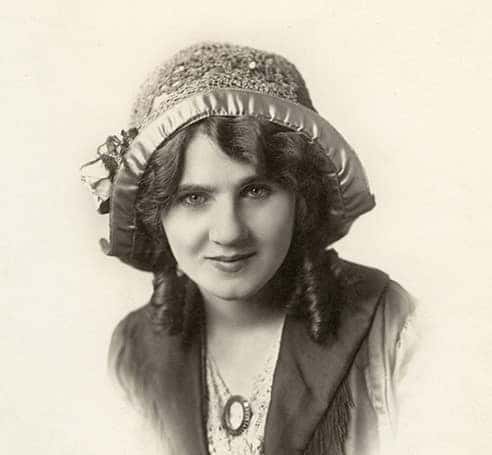 One of the earliest people to recognize the problem wasn’t an automaker or an engineer—it was Florence Lawrence, one of the first movie stars of the 1910s and one of the earliest women to regularly drive her own car.
In 1915, after noticing how difficult it was for other drivers to anticipate her movements, Lawrence devised an electrically operated signaling arm that popped out of t
he vehicle to indicate turns. She also imagined a system that automatically signaled braking. It was a remarkably forward‑thinking idea—one that laid th
e groundwork for electric turn signals and brake lights long before they became common.
She never patented the invention, which meant her idea quietly spread without widespread recognition. Like many safety innovations, it wasn’t flashy enough to make headlines—but it worked.
Slow Adoption, Big Consequences
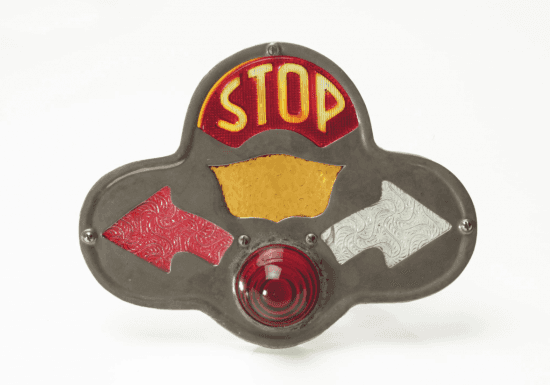
Mechanical signaling arms, called trafficators, began appearing on vehicles in the 1920s, especially in Europe. They extended from the side of the car to indicate a turn and retracted afterward. Some worked better than others. Some barely worked at all.
American automakers were slow to adopt them, and drivers continued relying on hand signals and assumption well into the 1930s. Improvements came gradually: illuminated indicators, then flashing lights, which proved far easier to notice.
In 1929, Oscar J. Simler patented a system that closely resembles the modern turn signal. Buick introduced the first factory‑installed flashing turn signals in 1938. Even then, widespread adoption lagged. Turn signals didn’t become standard equipment on U.S. vehicles until the early 1950s.
That means for decades, millions of drivers navigated busy roads without one
of the simplest tools for preventing confusion.
Simple by Design, Smarter Than Ever
Modern turn signals do exactly what they’re meant to do: communicate clearly and consistently. Today’s systems use bright LEDs for visibility, cancel automatically after turns, and are often integrated into side mirrors or driver‑assist features.
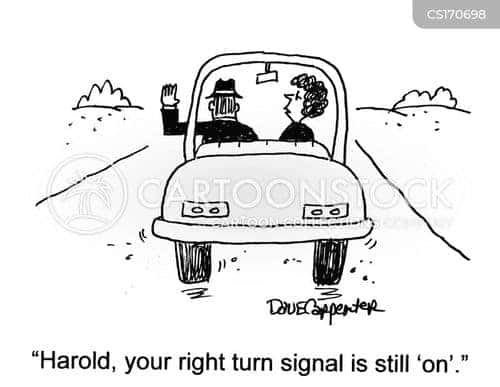
Some newer designs even replace the traditional stalk with steering‑wheel buttons—an adjustment that almost guarantees one accidental signal activation, followed by a quick laugh and a learned habit. Progress tends to work that way.
Despite all the technology behind them, the purpose hasn’t changed. Turn signals tell others what you’re about to do. That clarity builds trust between drivers—something roads have always needed more of.
Why This Still Matters at Mills Automotive Group
At Mills Automotive Group, safety isn’t just about what’s new. It’s about what’s dependable. Turn signals are a reminder that the most important features in a vehicle aren’t always impressive—they’re consistent, familiar, and proven over time.
Being Trusted for Generations means valuing that kind of reliability. It means knowing that people bring more than keys to the dealership—they bring their routines, their families, their expectations that the vehicle they choose will take care of them when it matters.
So, the next time you use your turn signal—pulling onto a highway, teaching someone how to drive, or turning into one of our lots—remember: it wasn’t always there. It still matters. And like the best parts of any vehicle, it does its job quietly… even when someone forgets to use it.
Closing Scene…
…the turn is made. The ticking stops.
No honking. No confusion. No close calls.
Just one small signal, offered early enough to matter.
Sometimes safety sounds like nothing more than a quiet click and a little patience.
To be continued…
Motavalli, Jim, and Cartalk Digital Inc. “The Strange but True History of the Turn Signal.” Car Talk, 3 Oct. 2019, www.cartalk.com/blogs/jim-motavalli/strange-true-history-turn-signal.
Harris, Sidney. “Research Hand Signals.” CartoonStock, 2026, www.cartoonstock.com/directory/h/hand_signals.asp. Accessed 7 Apr. 2026.









0 comment(s) so far on It’s Worth the Drive – S1E2: The Light That Changed Driving